icon
News Community Store
Back to home

Daily Mobile Gaming News

A cleaner daily brief on mobile game launches, updates, and pre-registration moves worth watching.

Fortnite adds Kingdom Hearts crossover, Power Hour on Sept 20 (KST)
News Sat, Sep 19, 2026

Fortnite adds Kingdom Hearts crossover, Power Hour on Sept 20 (KST)

Epic Games has launched a Fortnite x Kingdom Hearts crossover that brings Keyblades, signature items, and character outfits into Fortnite, with specific events timed for Korean players. The collaboration introduces the Kingdom Chain Keyblade and Sea‑Salt Ice Cream heal item, plus skins for Sora, Riku, Kairi, Roxas and other main characters available through the Item Shop and bundles. Equipping the Kingdom Chain lets players perform chained melee combos and call down lightning on opponents, while Sea‑Salt Ice Cream restores health and shields during combat. A heart‑shaped moon will appear over the island and create two new “Kingdom Hearts Overrides”: a match‑wide and squad‑applying recovery override that causes healing orbs to drop when enemies are defeated, and a squad‑only level‑up override that summons a mythic Kingdom Chain at each squad member’s location. Fortnite will run two Korea‑time Power Hour sessions on September 20: 03:00–05:00 KST and 10:00–12:00 KST. Every player in Power Hour matches will begin the round already holding a Kingdom Chain and Sea‑Salt Ice Cream. The new character bundles in the Item Shop include themed back bling, pickaxes, a LEGO Fortnite style accessory, and the Shadow Shoes sold separately. If you plan to play in Korea on September 20, those two Power Hour windows guarantee you start matches with the Kingdom Chain and Sea‑Salt Ice Cream—so the first few fights will feel a lot more Keyblade‑ready than usual.

Nananai Studio's 구해줄거냥? launches Aug 25 on iOS and Android
News Sat, Sep 19, 2026

Nananai Studio's 구해줄거냥? launches Aug 25 on iOS and Android

Nananai Studio released its new mobile game 구해줄거냥? on August 25, arriving on Google Play and the Apple App Store worldwide. The studio behind Forest Island — which has a global cumulative total of 10 million downloads — published the game as a cat-focused puzzle and village-building title that pairs arrow-based puzzles with collectible cats and editable town spaces. Gameplay centers on untimed arrow puzzles: players scan arrow directions, tap the screen, and free cats trapped in vines. Puzzle difficulty scales from simple, single-path boards to multi-directional tangles, and a hint feature is available when progress stalls. There is no in-game timer, so puzzles are designed for leisurely play; completing a puzzle yields a heart reward that feeds into the town-growth loop. Rescue rewards are also the collection mechanic. Each solved stage can unlock a new cat to add to your catalog, ranging from familiar types like cheese tabby and tuxedo to Russian Blue. Players can name rescued cats, outfit them with costumes and exclusive items, and watch them interact in the village — purring, rubbing heads, and chasing fluff balls — as part of the in-game cat encyclopedia. Hearts earned from rescues serve as the currency for decorating a cozy cat village. Furnishings such as furniture, fountains, playgrounds and a fishing spot can be placed to liven the town, and growing the village attracts more cats. The village offers themed expansion areas including a cherry-blossom garden, a beach, a farm and a campsite, letting players customize multiple spaces rather than a single hub. Nananai Studio founder Park Jae-hwan described 구해줄거냥? as a "healing game" with an intuitive cycle: solve puzzles to rescue cats, and use rescued cats to grow the town. He added that the team combined production and live-ops know-how from Forest Island with artwork aimed at a global audience. To celebrate the launch, every player who downloads the game receives a limited-edition "Sprout" cat as a gift; further details and ongoing events are posted on the game's Google Play and App Store pages and the official Instagram. Takeaway: 구해줄거냥? pairs untimed arrow puzzles with a heart-based village progression—rescue cats to earn hearts, spend hearts on furniture and themed areas, and collect new cats that can be named and dressed—plus a launch-time limited "Sprout" cat granted to all downloaders.

Mirai-si demo improved at Tokyo Game Show 2026 — Smilegate
News Sat, Sep 19, 2026

Mirai-si demo improved at Tokyo Game Show 2026 — Smilegate

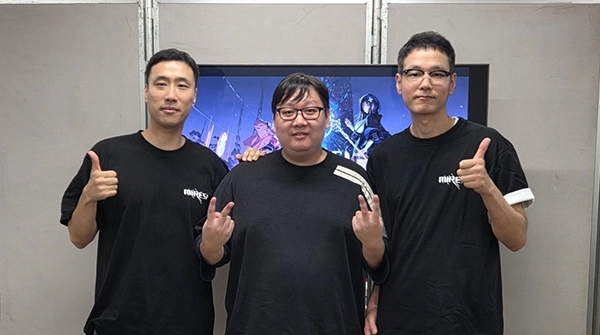
Smilegate brought its subculture title Mirai-si: Invisible Future to Tokyo Game Show 2026 for a second consecutive year, showing an updated demo that visitors could play on-site. The studio presented a build with extensive changes to UI, 3D character modeling, shaders and overall content flow after receiving feedback from last year’s reveal, and core team members Kim Hyung-seop (AD), Jo Soon-gu (PD) and Kwon Se-woong (CD) spoke on development status and next steps at the show. Jo Soon-gu, the project PD, said the current demo is not identical to the final retail build but was reworked to highlight Mirai-si’s core systems and the team’s intended direction rather than adding new scenarios. Last year’s TGS demo had been assembled to show a full match from start to finish, with narrative beats between characters; this year’s presentation focused on polishing the systems that underlie those moments. The on-floor build ran on PC hardware this time, which let the team introduce keyboard shortcuts and refine UI behavior that had previously been oriented toward mobile. According to Jo, that platform shift and UI rework were part of an effort to address specific complaints raised after the initial reveal. The headline technical work at TGS centered on 3D model and shader fixes. Jo acknowledged the first public models lacked polish and said the team had already mapped out corrective steps before TGS 2026. Those fixes included correcting camera framing so characters no longer appeared flattened, and tightening control over technical rendering elements that had previously been mishandled. Because the corrective work had been scoped earlier, the team said they were able to apply many changes quickly and iterate in a relatively short timeframe leading up to the show. Art director Kim Hyung-seop described the shader work as a main focus this cycle. Kim noted that last year’s negative feedback clustered around character modeling, so the team concentrated on reproducing his signature lighting and chiaroscuro-style shading in three dimensions. He framed the challenge as translating his personal visual language—how he handles light, shadow and contrast—into a 3D pipeline with more precise shader control and lighting passes. Kim allowed that the result is not yet final, but he expects further improvements to character models as shader and modeling work continues. On-unity across diverse character archetypes—wizards, ninjas, cyborgs—the art team applied a visual motif tied to an in-game mechanic called the “stigma.” Kim said they used the stigma as a unifying graphic and thematic element so characters with different concepts still read as part of a single world. After establishing that common visual thread, the team then layered each character’s unique personality and anatomical choices so individual silhouettes and behaviors still stood out. That approach was intended to keep the cast distinct while giving players a consistent aesthetic reference point when scanning party lineups. Smilegate’s booth presentation included a large LED display showing a playful in-game sequence where characters squeeze through pipes and interact in confined spaces. Jo explained the booth idea originated from the publisher’s business division and was realized in collaboration with the development studio. The LED vignette was designed to convey character body types, conversational quirks and animation details through brief, high-visibility moments—an on-floor way to show off personality and art direction without requiring a deep demo session. On gameplay, creative director Kwon Se-woong addressed comments that the real-time turn-based combat felt slow or repetitive in the demo. He described the team’s combat intention as slicing the feel of an AOS-style team fight into frame-by-frame, turn-resolved moments—so players can appreciate tactical exchanges at a granular tempo. To reduce perceived downtime, the demo shortens the pre-match wait and attempts to pull the first turn in early so players jump into decision-making faster. Kwon also said the full release will include automated options: sections where player power is high enough will support auto-play to speed clearing, while encounters that require player ingenuity will remain intentionally tactical. Jo added technical measures aimed at pacing: faster turn cadence through equipment and item choices that increase character speed, and a sequencing design where clustered turn order keeps action flowing once characters’ stats are optimized. For routine or repetitive content, the team plans simple sweep/clear tools so players can avoid unnecessary grind; for harder content, the same systems will leave room for manual input and skillful play. Jo emphasized the team’s intent to strike a balance between low-friction progression for daily tasks and hands-on challenge where players want to test their setups. On PvP, Jo said the studio thinks real-time PvP as a core feature may not match typical subculture players’ preferences, but the team has implemented a playable system internally. Public plans are to treat PvP as an optional, low-pressure mode—more like friendlies than a mandatory ladder—so players can try it without service-era pressure. The developers intend to monitor user reaction after launch and expand that option only if the community shows sustained interest. Planned testing and release cadence remain provisional. Jo confirmed that testing will precede a formal launch and that the team is currently focused on lifting overall build quality and increasing content volume to approach test standards. He said final decisions on test scope and specifications depend on ongoing discussions with Smilegate’s business division, so the team could not commit to concrete CBT or launch dates at TGS. On post-launch metrics, Jo said the studio prioritizes active user count over immediate revenue numbers; they view a larger, engaged player base as a prerequisite for rolling out additional services and content expansions. The demo included feature plans beyond combat and core presentation. The team showed a ‘memento’ system that layers background, voice and sound with illustration to add dimensionality to character storytelling. Kim and Jo discussed an in-game figure/pose feature: rather than force exhaustive animation collection, they’re leaning toward light achievement-style rewards—specific animation frames or poses that players can obtain without full-collection pressure. The figure system may include modest collecting or light achievement mechanics, but designers are guarding against heavy collection fatigue by keeping R&D focused on low-burden rewards players can display. Takeaway: Smilegate’s Mirai-si team used two straight years at Tokyo Game Show to convert last year’s visual and UI critiques into concrete fixes—camera framing, shader passes, PC-focused UI shortcuts, pacing tweaks and a small, approachable figure/achievement plan—and they’re moving toward a closed test window once build quality and content volume meet the business-side specs. For players that noticed last year’s rough edges, the TGS 2026 demo gives specific points to re-evaluate: shader-driven lighting, tighter camera framing, keyboard-friendly UI on PC, and an auto/quality-of-life plan tied to combat-power thresholds.


Smadex refreshes brand as Performance CTV scales through 2025–26
News Fri, Sep 18, 2026

Smadex refreshes brand as Performance CTV scales through 2025–26

Smadex has refreshed its brand and website as the adtech firm expands from mobile-only user acquisition into Performance CTV for apps and games. The company says it began testing connected TV for app growth in 2022 and launched its Performance CTV product in 2023, and that the channel has scaled significantly across 2025 and 2026. Founded in 2011, Smadex built its business on mobile UA across in‑app and mobile web before layering in TV. The redesigned site uses the tagline “Grow Your App across Mobile and CTV” and the phrase “one engine, two screens, infinite optimisation.” Smadex describes a single platform that combines mobile and CTV signals and runs a deep neural network to link TV and mobile activity at household level, optimising campaigns against predicted outcomes rather than impressions. Smadex pointed to a recent gaming advertiser as a performance proof point. With a one‑hour attribution window, 81.4% of installs arrived within the first hour of an impression and 91.2% of reached households had no prior interaction with the app; the campaign recorded a 67.2% ROAS lift. The company wrote, “CTV has been around for some time; Performance CTV for the App Economy is relatively new. Smadex is one of the pioneers. We have built and are constantly innovating a growth engine to tap into the combined power of mobile data and big screen signals to drive conversion on people’s phones.” Takeaway: App advertisers who already run mobile UA now have a vendor pitching a single optimisation engine across phone and TV, with one campaign case showing quick installs and a 67.2% ROAS lift—concrete numbers you can test against your own benchmarks.

Atelier Sophie opens Japan pre-registration for AI chat app with voice and ASMR
AI + Mobile Fri, Sep 18, 2026

Atelier Sophie opens Japan pre-registration for AI chat app with voice and ASMR

Atelier Sophie has an officially licensed AI chat app opening pre-registration in Japan, Gust announced. The app lets users converse with Sophie Neuenmuller by text, synthesized voice responses and an ASMR-style audio mode; the official site lists the release date as “coming soon” and pre-registration is limited to residents of Japan. Sophie’s spoken lines use voice recordings made with her actress Yuka Aisaka’s permission, and the team says they will not use any unauthorized audio for training or in-app playback. Users can switch between text, voice and ASMR conversation styles, and several outfit options for Sophie are planned from launch windows mentioned on the site, including swimsuit and bunny-ear designs. Original Atelier Sophie character designer NOCO is supervising the app’s illustrations, and the project states generative AI was not used for the artwork; human artists produce all images under NOCO’s supervision. The announcement also says a portion of revenue will be returned to participating creators, and that Sophie’s synthesized voice was created exclusively from recordings authorized by Aisaka. Gust notes the team previously released RyzaChat:AI, based on Atelier Ryza’s Reisalin Stout; that app has logged more than 15 million total spoken interactions and reached first place in Japan’s App Store free Entertainment chart. RyzaChat:AI will gain new outfits drawn from existing illustrations (starting with Chinese dress and Halloween) with additional drops in December and January, plus planned multiplayer for up to four people and a travel mode including a Japan map. If you want an officially authorized Sophie voice, pre-registration is Japan-only for now and the release date remains “coming soon” on the official site.

You Have Awakened arrives October on MapleStory Worlds with Traditional Chinese
News Fri, Sep 18, 2026

You Have Awakened arrives October on MapleStory Worlds with Traditional Chinese

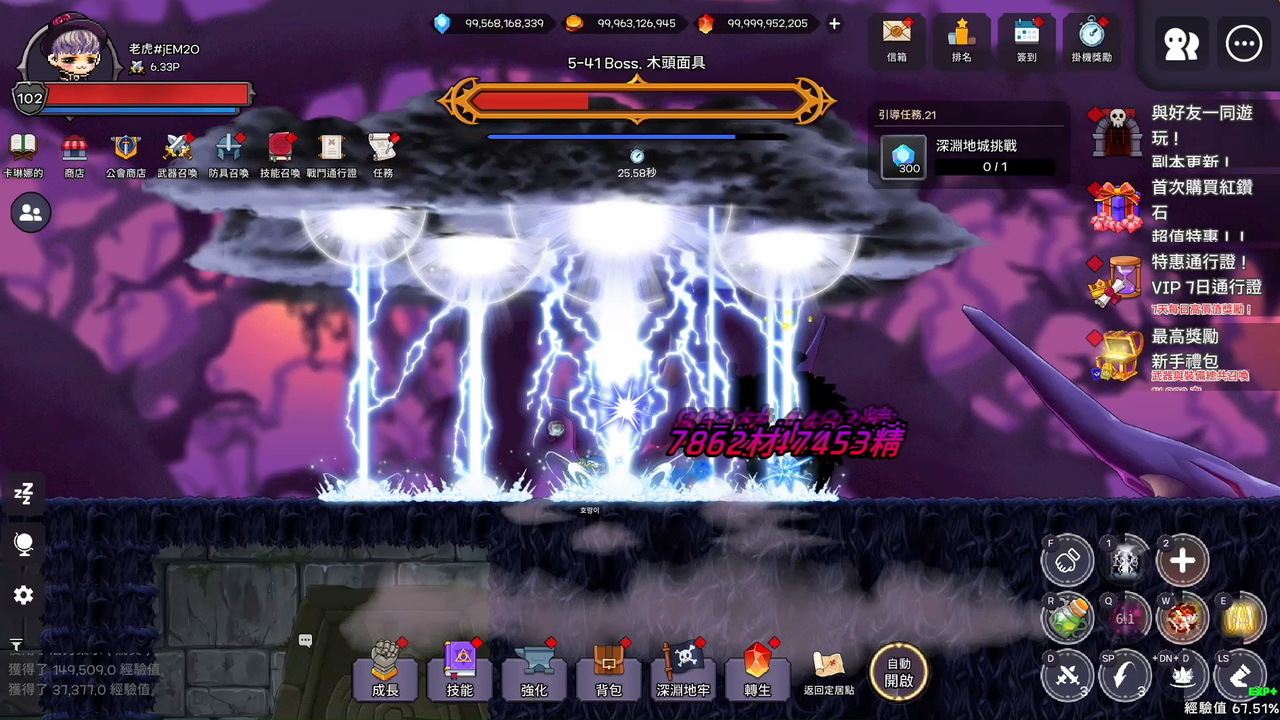
You Have Awakened (당신은 각성하였습니다.), a solo project from Korean developer Tigerworks, will leave pre-open and officially launch in October 2026 on the MapleStory Worlds platform with full support for official Traditional Chinese. The game is free-to-play, cross-platform on PC, iOS and Android, and the developer says player data from the current pre-open will be preserved for the live launch. Built as a fast-paced idle action RPG inside MapleStory Worlds, You Have Awakened stages its story in a copied MapleWorld where awakened heroes set out from the settlement Everdusk to climb a mysterious tower and save a collapsing world. The team has already posted the introductory story episode for the core Runeword system, titled “World Memory,” and the narrative will expand across future seasonal updates. Combat is split into two distinct experiences. The main loop leans on high-speed, screen-clearing auto-battles designed around satisfying large-mob kills, while 2-to-4 player raid bosses disable auto-battle entirely and require 100% manual inputs for movement, skill timing and teammate coordination. The game’s auto-battle uses an AI-driven Auto-Swap system that can switch between preset gear sets—one tuned for clearing mobs and another for tackling elites—so players only need to optimize two loadouts instead of micromanaging every encounter. Systems beneath the surface aim to reduce busywork. Equipment spans one-handed swords, two-handed swords, bows and more, with S-rank special weapons carrying unique effects to change combat behavior. Gear wear, dismantle, synthesis, enhancement and growth can all be handled through a one-click bulk management tool. Planned live updates for and after the October launch include new raid content, an in-game marketplace that supports player trading, the Runeword system, and a Combat Sequence feature letting players set custom auto-battle casting orders; seasonal content will add exclusive gear, skills and thematic events. Tigerworks says the initial design goal was to capture the instant satisfaction of floods of enemies being cut down while letting players use smart auto-battle for steady progression and switch to pure manual play for raid challenges with friends. The game already provides global automatic translation during pre-open and will replace that with an official Traditional Chinese localization at launch in October 2026. Because the title runs on MapleStory Worlds with a single cross-platform account and promises retained pre-open saves, players who’ve been testing the build can pick up their progress as the game moves into the full release. Takeaway: If you’ve been farming during pre-open, your progress carries into the October 2026 launch—and when official Traditional Chinese arrives, the same cross-platform account will let you keep playing on PC or mobile without starting over.

Riftbound launches in Korea on Sept 18 after global rollout
News Fri, Sep 18, 2026

Riftbound launches in Korea on Sept 18 after global rollout

Riftbound arrived in Korea on September 18, bringing the League of Legends IP to local card-game tables. The game first launched in China on August 1 last year and rolled out to English-speaking regions, including North America and Europe, on October 31, putting the title into overseas markets before the Korean debut. Riftbound’s competitive footprint is already measurable. A national tournament held in Beijing this July drew more than 2,000 participants across two days. On the commercial side, TCGplayer’s U.S. market tallies put Riftbound fifth in total TCG transaction volume in Q4 of last year, and the title ranked fifth and sixth in the platform’s Q1 and Q2 charts this year respectively — figures that put it alongside established card brands in raw marketplace activity. The core win condition swaps League’s lane-and-nexus logic for a battleground scoring race: the first player to reach eight points wins. Each player places two battleground cards between the boards, and fighting units resolve on those battlegrounds. After a clash, the side that leaves units on a battleground scores; if they remain in control at the start of the next turn they gain an additional point. Instead of sieging a nexus, players capture and hold contested territory card-by-card. Deck-building pivots on legendary champion cards lifted straight from League. Players pick one champion as their deck’s identity and place the champion’s unit card as their starting champion. That choice narrows the usable card pool and steers strategic options. Units and spell cards handle the front-line combat and support, while runes act as the game’s resource: the number of runes available each turn grows as the match goes on, so matches typically start with smaller plays and open into wider options as runes accrue. Rune usage is tracked physically on the card by bending used rune cards to the right. Fans of the original IP will find deliberate nods to League skills and lore in card design. Ahri’s signature charm, which in League pulls enemies toward her, appears as a spell that moves an enemy unit on-table. Non-champion units also carry narrative flavor: a unit called Noxus Corpsband spawns recruit tokens each time it moves to a battleground, echoing Noxus’s mobilization themes. Playtesters at the GGX showcase sampled only a portion of the set, but found that scanning revealed many small, recognizable implementations of champion abilities and faction motifs. Gameplay text uses compressed keywords rather than long prose, and two of the most consequential keywords are Action and Reaction. Cards with Action or Reaction can be played on the opponent’s turn under the right conditions: Action cards can be used during decisive moments on an opponent’s turn, while Reaction cards can be played in response to Actions. That rule set opens frequent back-and-forth within a single round, with public information like champion choice and rune count pitted against private hand holdings. At the GGX showcase, one-on-one demo matches felt brisk: an on-site 4-point skirmish finished after two or three exchanges, while the full 8-point standard mode promises longer build-up and push-pull in mid-to-late game stages. Riftbound’s mix of League-flavored cards and TCG mechanics produces two clear entry points for players. League players will catch familiar skill motifs—Ahri’s charm and faction-driven token generation among them—when they read the card text. TCG players can engage with the Action/Reaction timing and the steady expansion of rune resources each turn. Between the Beijing tournament turnout and the TCGplayer rankings, the title’s overseas traction is visible; the Korean launch on September 18 simply adds another region to a rollout that began in China on August 1 and expanded to English territories on October 31 last year. Takeaway: if you’re building around a favorite League champion, expect a match rhythm that starts small and opens as runes accumulate, while keyword timing (Action and Reaction) creates the kind of turn-to-turn give-and-take that makes reading the opponent’s hand feel important. The way champions determine a deck’s card pool means your champion pick will shape both early-game options and the strategic arc across the match.

Joy Games launches Hudeodeok Survival, follow-up to Sept 2024 hit
News Fri, Sep 18, 2026

Joy Games launches Hudeodeok Survival, follow-up to Sept 2024 hit

Joy Games has released the mobile roguelike shooting-defense RPG Hudeodeok Survival, positioned as the sequel to 2024's Sept release 감자슉슈슉, which reached number one on Google Play and the App Store. The new title keeps the predecessor’s hack-and-slash RPG and roguelike core while adding explicit tower-defense and shooting mechanics to the loop. Hudeodeok Survival is set in a zombie-covered apocalypse where a duck protagonist gathers hero companions to defend a base. Players build and upgrade their base during the day, then fend off hordes at night, combining tower placement and defensive planning with direct shooting combat. The game also includes skill awakenings so players can choose growth routes mid-battle, plus hero recruitment, equipment evolution, and multiplayer guild battles for cooperative play. Pre-registration rewards listed by Joy Games include a limited duck skin, 777 gacha pulls, an Epic-grade gatling gun, and 100,000 in-game currency. Additional event rewards are available through the game’s official Naver lounge, where participants can claim hero supply tickets, skill supply tickets, and random enhancement blueprints; the Naver lounge holds the full event details. If you liked 감자슉슈슉’s roguelike progression, Hudeodeok Survival hands you the same character-growth and loot loops but layers in base-building strategy and real-time shooting combat — plus the pre-registration bundle and Naver-lounge drops if you signed up early. That combination makes the game easy to slot into both solo roguelike runs and cooperative guild skirmishes.

Doki Doki Literature Club returns to Android via Epic Games
News Fri, Sep 18, 2026

Doki Doki Literature Club returns to Android via Epic Games

Serenity Forge says Doki Doki Literature Club is once again available on Android through Epic Games Store Mobile, and the full game can be played for free on supported phones and tablets. Players who want the extra content can buy Doki Doki Literature Club Plus! as a paid add-on from the same mobile storefront. The mobile release was pulled from the Google Play Store in April 2026 but remains available on iOS. The game casts you as a new member of a school Literature Club: you write poems, make choices that influence the other characters, and slowly uncover the title’s horror-tinged twist on school romance. Doki Doki Literature Club Plus is also available on PlayStation 4, PlayStation 5, Xbox One, Xbox Series X|S, Nintendo Switch, and PC via Steam, and we covered the PC release in our review if you missed it. If you want to play the base game on Android without spending a cent, Epic Games Store Mobile now offers that option, with Plus available separately as paid DLC for players who want the expanded content.

The New York Times expands Jonathan Knight into chief games officer
News Thu, Sep 17, 2026

The New York Times expands Jonathan Knight into chief games officer

The New York Times has promoted Jonathan Knight into an expanded chief games officer role, keeping him at the head of the publication’s games operation. Knight announced the move on LinkedIn and said he was grateful for the continued opportunity to support the paper’s mission to seek the truth and help people understand the world. Knight has led NYT Games since joining the company in September 2020. His tenure includes overseeing the acquisition and integration of Wordle in 2022 and creating Crossplay, the paper’s first two-player competitive word game, which hit No. 1 on the Top Free Games chart. His remit at NYT has covered P&L and the publishing pipeline for daily titles including The New York Times Crossword, Spelling Bee, Connections, Strands and Pips. Before NYT, Knight spent more than two decades in games. At Warner Bros. Games he was VP and studio head in San Francisco, leading more than 100 developers on Harry Potter: Wizards Unite and launching DC Legends. As SVP of games at Zynga he ran the Ville and With Friends divisions, overseeing more than 300 employees and launching New Words With Friends and FarmVille on mobile. Knight also worked nine-plus years at Electronic Arts as VP and executive producer on projects including The Sims and The Simpsons Game, and began his career at Activision producing titles such as Return to Castle Wolfenstein. Takeaway: Knight’s expanded title formalizes control over NYT’s live-games business and development pipeline — he’s managing P&L and the daily puzzle slate after leading Wordle’s integration and a Crossplay launch that reached No. 1, so the company’s games lineup now sits squarely under his remit.