icon
News Community Store
Back to home

Daily Mobile Gaming News

A cleaner daily brief on mobile game launches, updates, and pre-registration moves worth watching.

Phantom Blade Zero and ANOMALITH launch this week worldwide
Launch Mon, Oct 26, 2026

Phantom Blade Zero and ANOMALITH launch this week worldwide

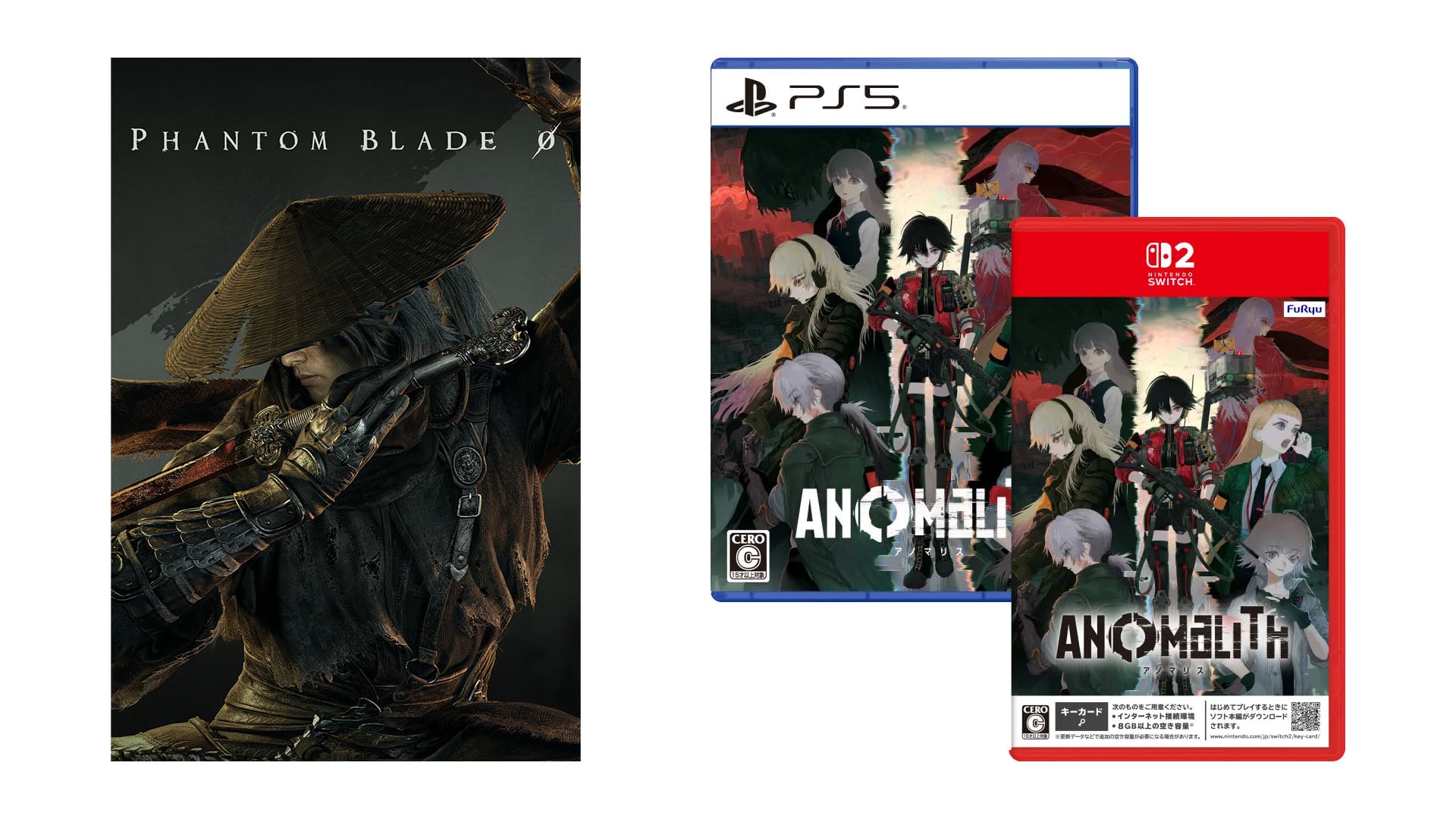
Phantom Blade Zero (PlayStation 5, PC) and ANOMALITH (PlayStation 5, Switch 2, PC) are the headline releases in this week’s round of Japanese game launches, arriving worldwide in digital and physical forms across multiple platforms. The week’s schedule mixes console ports, Switch 2 debuts, digital-only indies, and a handful of mobile launches, with releases available on PS5, Switch, Switch 2, PC (Steam, Epic, GOG, Microsoft Store), and iOS/Android. Physical and hybrid digital/physical releases this week include ANOMALITH on PS5 and Switch 2 (digital worldwide), Demon Slayer: Kimetsu no Yaiba – The Hinokami Chronicles 2 Nintendo Switch 2 Edition (worldwide), and several titles already available digitally such as Dune: Awakening (PS5), Fantasy Maiden Wars: Dream of the Stray Dreamer (Switch), Hazel Sky (Switch), and Hell Let Loose: Vietnam (PS5). New or reissued Switch 2 entries landing this week include Hello Kitty: Party Land, Kuukiyomi 4: Consider It (Nintendo Switch 2 Edition), LEGO Harry Potter Collection, Minecraft (Switch 2), and Pokemon Legends Z-A Nintendo Switch 2 Edition plus DLC “Mega Dimension” and Pokemon Pokopia with Expansion Pass. Meiji Tokyo Renka: Twilight Kiss appears both as a Switch digital launch and separately as a PC (Steam) release. The digital-only list is long and leans heavily on indies and multi-platform ports. Notable Steam and console digital arrivals include 4 Penny Coffins (PC), ANOMALITH (PC), ASYLUM across PlayStation, Xbox, Switch and PC, ATMOSFAR Early Access on Steam, and BUZZ or DIE on PC. Several Switch and Switch 2-focused indie launches appear as well: Black Lily’s Tale (Switch), BURGGEIST (Switch 2), Frog Sqwad (PS5, Switch 2), and Cities: Skylines – Expanded Edition for Switch 2. PC-focused releases this week include Culdcept BEGINS (Steam), Danchi Days (Steam), Emberville Early Access (Steam, GOG), and REKA (Steam). Console and larger-platform ports also populate the list: Gennady arrives on PS5, Xbox Series, PS4, Xbox One and Switch with PC storefronts; Hatsune Miku Connecting Puzzle TAMAGOTORI Deluxe launches across PlayStation, Xbox and PC storefronts; Metro Redux comes to PS5 and Xbox Series; Remothered: Red Nun’s Legacy is listed for PS5, Xbox Series, Switch 2 and PC (Steam, Epic, GOG); and SNØ: Ultimate Freeriding, Queen’s Domain, and SULFUR each appear across PS5, Xbox Series and Switch 2 where noted. The Switch family sees Kowloon’s Gate: Suzaku (digital worldwide) and Look Outside on multiple Nintendo hardware variants and PlayStation platforms. Mobile and other platform-specific highlights include Monster Hunter Outlanders launching worldwide on iOS and Android, and No Man’s Sky appearing on iOS. Phantom Blade Zero is confirmed for PS5 and PC via Steam and Epic Games Store as a worldwide digital launch. Several early-access entries are scheduled this week too, such as ATMOSFAR and Pao Pao (Xbox Series, PC), plus Scramble Knights Online entering Early Access on Xbox Series and PC storefronts. Downloadable content and major updates arriving alongside these launches include 2XKO DLC characters Samira and Sett (PS5, Xbox Series, PC), Age of Empires IV Raiders of the North DLC across consoles and PC, Cairn free DLC “On the Trail: Deep Water” for PS5 and PC, Crimson Desert DLC “Charting the Unknown” for PS5/Xbox Series/PC, and Dragon Ball Xenoverse 2’s 10th Anniversary update across consoles and PC. If you prefer a single takeaway: the week stacks high on cross‑platform ports and indie Steam launches while slipping a few notable console-first Switch 2 editions and mobile entries into the schedule, so the platform you play on will determine which of these releases actually lands on your device.

FAREIDOLIA to debut Korean demo at AGF 2026
News Mon, Oct 26, 2026

FAREIDOLIA to debut Korean demo at AGF 2026

Nexon announced that FAREIDOLIA, developed by Nexon Games' RX Studio, will appear at Anime X Game Festival (AGF) 2026 with the Korean-language demo being shown to domestic players for the first time. The demo lets Korean visitors try the game in-person at the AGF booth, following prior public showings at Anime Expo and Tokyo Game Show. FAREIDOLIA is being built for PC, console, and mobile by RX Studio, the Nexon Games IO division team that previously worked on Blue Archive. The title uses Unreal Engine 5 and centers on a 3D art style plus a "live turn battle" combat system. Players take the role of the revival center manager for the otherworldly city Anima City, living alongside special-ability partners called "Mates" and tackling anomalous events through exploration and combat. The AGF booth will recreate the game's communal space, the "Tasogare Hall," so attendees can wander multiple in-game areas on-site and pick up original novelty items. Organizers will offer interactive features that use voice recognition: visitors can speak directly to a Mate or even play rock-paper-scissors with them using voice commands. Nexon Games RX Studio producer Cha Min-seo commented, "We're happy to present FAREIDOLIA's world to domestic players for the first time," and invited attendees to experience the project's character interactions, exploration, and combat firsthand. If you plan to visit AGF 2026, the concrete takeaway is simple: this is FAREIDOLIA's first Korean-language hands-on, and the booth is set up to let attendees test both the Mate interactions (including voice-driven exchanges) and the live turn battle mechanics in a recreated in-game living space.

Uma Musume: Shundai Festival training scenario — hands-on preview from 4Gamer
News Sun, Oct 25, 2026

Uma Musume: Shundai Festival training scenario — hands-on preview from 4Gamer

Uma Musume Pretty Derby’s new training scenario “Shundai Festival” received a media-only hands-on ahead of release, and 4Gamer attended the preview session to report what players will actually be doing in the twelve-year festival setting. The scenario sets several Uma Musume as sacred festival horses called “kami-koma” and centers development around five named festival pieces — each tied to a different training stat — plus a new friend-type support, Azuma (voiced by Kotono Mitsuishi). 4Gamer’s session included two full runs of the scenario and a room-match race; Cygames is the publisher behind Uma Musume, and Automaton appeared among the room-match participants in the preview race results included below. Shundai Festival is a full-distance scenario similar in scope to the previous “Trecen-kan” scenario, and the baseline stat caps are raised compared with that prior mode: Speed cap increases from 2150 to 2200, Stamina from 1800 to 1850, and Power from 1700 to 1800. The scenario keeps the same training length mechanics as Trecen-kan — the育成 period runs until the URA Finals — and each horse is assigned a fixed target race during育成. An end-of-year event called the “Progress Presentation” checks progress against those targets; the outcome is either “Success” or “Great Success,” with Great Success granting stronger bonuses such as Friendship Bonus, Specialty Rate Up, Hint Chance Up, and Race Bonus. 4Gamer noted the scenario was still undergoing balance tweaks at the preview, so some numerical values remain subject to change. The scenario’s new narrative face is Azuma, the shrine maiden of the Shundai Festival. Azuma appears as the scenario friend-type special support SSR card [Itodome detaki, Matsuri Kana], and her scenario-link effects are tightly integrated with the Shundai mechanics. Azuma’s card also interacts strongly with the scenario’s “outing” (going-out) command, which the preview flagged as a core tactic; her link raises the maximum achievable level for each festival piece and gives a modest bonus that can push piece levels past key thresholds. Kotono Mitsuishi provides Azuma’s voice, and the preview materials confirmed Azuma’s scenario-link benefit that the smallest festival piece level can be increased by +1 during outings. The preview stressed that Azuma’s SSR is effectively required to cap festival piece levels above Lv8 — the point where piece-level gains produce noticeably larger training bonuses — and the scenario-link effects work even on an unbound (non-upgraded) SSR. Shundai Festival introduces five named “pieces” that anchor育成 choices: Yabusame (Speed), Divine Banner Contest (Stamina), Nōmai (Power), Great Float Pull (Guts), and Hikuga (Wisdom). Each piece has an assigned “piece handler” determined by support card type; for example, Speed-type supports act as handlers for Yabusame. Your deck’s supports plus one non-deck handler per piece take part in practices and contribute to the piece gauge. Practices attended by a handler add +1 to that piece’s gauge, and Friendship Training adds +2. When a piece gauge fills, you can trigger an “piece practice” for the stat tied to that piece; executing a piece practice raises that piece’s Piece Level and resets the gauge. Higher Piece Level increases the potency of future piece practices, so piece Lv progression is a repeatable source of strong stat gains during育成. Parallel to piece practices is the “Teachings” system: at fixed timing windows players receive a set of buffs called Teachings, which can be assigned to one of the five pieces and later combined to strengthen their effects. The first Teaching transfer occurs on Turn 3 and grants five base Teachings: Bond Teaching, Specialty Rate Teaching, Hint Teaching, Assistance Teaching, and Stamina Teaching. Later transfers occur at the start of Classic and Senior years and offer upgrade Teachings that can be fused with the base Teachings in a one-time “Teaching Transmutation.” The second transfer offers two upgrade Teachings (Specialization Teaching and Diligence Teaching); the third offers three (Cooperation, Tenacity, and Dual-Path Teaching). Each base Teaching can undergo at most one transmutation, and the choice is permanent for that育成 run, so your assignment of which upgrade to fuse with which base Teaching shapes how strong specific piece-focused buffs become. 4Gamer recorded that Teachings are fixed rather than random in the preview builds, which raises the scenario’s reproducibility and learning curve. Piece Level targets are tied into Progress Presentation outcomes. The scenario sets target Piece Lvs that must be met by the end-of-year check: Junior class requires Lv3, Classic requires Lv5, and Senior requires Lv6 for each piece. If any single piece fails to meet its target, the presentation may return only a Success-level result instead of Great Success, reducing the end-of-year bonuses. The preview also confirmed that piece practice effects differ by class: Junior, Classic, and Senior piece practices yield progressively larger bonuses, and the Senior-level piece practice unlocks an additional buff only if your deck includes five or more distinct support types. The Senior buff is gated by the diversity of your support deck, so a meta that uses only four support types (for example, three Speed + one Stamina) will miss that extra Senior benefit. The preview suggested typical successful decks for the scenario might include Speed x2, Stamina x1, Power x1, Wisdom x1, and a Friend support — a configuration that lets you include the new Power SSR Maya no Top Gun while meeting the five-type requirement. Maya no Top Gun debuts as a Power-type SSR support card, labeled [Time of Departure], and the preview positioned her as more suitable for mid- to long-distance育成. Her skill pool and support bonuses skew toward those distance bands, and 4Gamer’s playthroughs used her to good effect in longer training builds. The scenario’s piece gauge fills only when the training includes a piece handler in the practice, not simply by doing a stat practice of that type — a Speed practice raises the Yabusame gauge only if a Yabusame handler is present in the session. Non-deck supports still appear as piece handlers and contribute to gauges, which the preview highlighted as a departure from some prior scenarios where off-deck supports had limited impact. That change made some previously-unused off-deck supports suddenly useful because they could act as extra piece handlers and supply additional Teaching buffs. Shundai Festival also replaces the usual summer camp with the Shundai Festival Camp, which converts all practice choices during camp into piece practices. The preview confirmed the camp occurs three times per育成 run, because Shundai Festival Camp can happen during Junior, Classic, and Senior — unlike prior scenarios where some camps did not occur in Junior. The preview noted that the camp lacks a mid-camp stamina recovery event that appeared in Trecen-kan, so players should avoid entering camp with unnecessarily low stamina. During camp, the opportunity to perform back-to-back piece practices makes camp a large, concentrated window for ramping Piece Lv and meeting Progress Presentation targets. 4Gamer closed the preview with quantitative notes from their two full育成 runs. Baseline stats in the preview runs ended generally higher than the Trecen-kan session; Playtest runs finished around 9,500 Skill Points and required approximately 25–30 minutes for an Auto育成 run. 4Gamer’s impression after two tries was that the scenario felt more accessible — you can still refine and squeeze extra stats by optimizing Teachings and piece practices, but accidental missteps produced fewer catastrophic results than their previous Trecen-kan preview. The preview highlighted a strategic tension: choose which base Teaching to transmute with each upgrade Teaching and where to assign base Teachings among the five pieces; those choices materially affect how each piece grows and how powerful piece practices become. The preview session ended with an on-site mini-festival and a room-match race using Kyoto 2200m (Elizabeth Queen Cup rules), the same regulations used in the October Champions Meeting. 4Gamer’s entrant, Still in Love, ran a good race with a late acceleration from her unique skill “Scarlet Lily’s Exaltation” but finished second to Almond Eye (the winner ridden by Dengeki Famicon Gamer). Automaton also fielded a Still in Love in the match and finished third. The in-person festival featured a photo spot with Azuma and Daiwa Scarlet panels, traditional festival booths, and small games; 4Gamer’s reporter tried target-throwing, yo-yo fishing, and a candy grab, with mixed luck on the prizes. Takeaway: Shundai Festival’s two-layer system — Teachings that you assign and fuse, plus repeatable piece practices that scale with Piece Lv — makes the scenario a procedural puzzle where piece assignments and Teaching transmutations determine whether you hit the Progress Presentation Great Success thresholds. Azuma’s SSR friend card and the five-or-more support-type Senior bonus are the clearest mechanical levers for hitting high Piece Lvs, and the preview’s numbers (raised stat caps, ~9,500 skill points, 25–30-minute Auto育成 runs) give a concrete sense of how a typical育成 might play out. Cygames’ implementation puts new decisions in the hands of the player: choose your Teachings carefully, include Azuma if you want Lv8+ piece scaling, and plan camps so you don’t enter them starved for stamina.


Factorio ships 2.1 stable on the 23rd as its final major update
News Sat, Oct 24, 2026

Factorio ships 2.1 stable on the 23rd as its final major update

Factorio developer Wube Software released the stable build of version 2.1 on the 23rd, announcing the update on its Friday Facts development blog and calling it the project’s last large-scale feature update. The 2.1 branch moved out of experimental testing that began in June and focuses on refining existing systems rather than adding new content. The update centers on factory layout and logistics quality-of-life changes. Players can now flip the orientation of previously hard-to-turn structures such as oil drills and burner miners, easing tight-placement designs. Circuit network wiring gained color-separated input and output lines, and the previously removed anti-mixing feature for pipes has been reintroduced to prevent different fluids from blending in shared conduits. Space Age, the 2024 expansion, received a significant logistics overhaul. Rockets can now carry mixed types of items in a single launch, and orbital platforms are able to transfer supplies directly between each other. Flight calculations for platforms moved from a width-based model to a mass-based one, altering how craft shape affects performance; narrow, elongated designs no longer enjoy the same automatic advantage. The expansion also added an unloading facility at landing pads and separated the quality system so players can run Space Age with quality disabled if they prefer. Visual and combat tweaks round out the patch. Assembly machines, refineries, and rocket silos received updated graphics, and enemy-spawn scaling and several combat systems have been adjusted. Wube said it will continue long-term support through bug fixes, platform compatibility updates, and modding support, even as the team winds down major feature work. Some developers have already shifted to prototyping new games and experimental projects outside of Factorio. Factorio began early access in 2016 and reached full release in 2020; 2.1 closes the chapter of large feature additions while keeping the game live. If you love reworking blueprints, the update hands you cleaner building blocks—colored circuit wires, reversible placements, and sane pipe behavior—plus a more flexible Space Age logistics stack and ongoing maintenance from Wube rather than further feature expansions.

System Era Softworks cuts 30+ staff after StarSeeker early access underperforms
News Sat, Oct 24, 2026

System Era Softworks cuts 30+ staff after StarSeeker early access underperforms

System Era Softworks said it has laid off more than 30 employees, announcing the reductions on the 23rd via the studio’s official channels. The cuts affect multiple disciplines — artists, designers, engineers, producers, writers, and QA — and the company said severance pay and outplacement support will be provided. Company marketing director Jo Tirado explained the context in a Reddit comment, saying StarSeeker: Astroneer Expeditions’ early access launch in June did not meet expectations despite substantial investment. StarSeeker uses the Astroneer setting for a multiplayer-focused cooperative exploration game; the title drew hundreds of thousands of players in early access but received mixed feedback tied to changes in core gameplay and its multiplayer emphasis. System Era said it will shrink the StarSeeker development group to better match the current player base while continuing work toward a full release. At the same time, the studio plans to move some previously outsourced work back in-house and reassign certain staff to the original Astroneer team, increasing headcount on the flagship project. The studio added it will publish a more detailed development roadmap soon and has begun internal discussions about development plans beyond 2027. Founded in 2014 and acquired by Devolver Digital in 2023, System Era noted that the original Astroneer remains successfully operational, but keeping the extra hires brought on for StarSeeker was no longer financially viable. The concrete takeaway: StarSeeker will continue development with a smaller team while Astroneer’s core development capacity grows as the studio reabsorbs roles and internalizes external work, and a roadmap with timing details is promised in the near term.

EA shutters BioWare after 30 years; Supercell completes Metacore takeover
Launch Sat, Oct 24, 2026

EA shutters BioWare after 30 years; Supercell completes Metacore takeover

EA has closed BioWare after roughly 30 years, cancelled the next Mass Effect, and carried out about 400 job cuts, PocketGamer.biz reports on episode 107 of the Week in Mobile Games Podcast. Hosts Mariam Ahmad and Aaron Aastle walk through the headline moves and the week’s other big stories. Live-game IP kept the spotlight this week: Wuthering Waves staged a show in Los Angeles, Uma Musume cancelled a planned concert because of visa issues, and Pokémon Night Out ran a tie-in with Pokémon Go. Those on-stage moments and cancellations are the week’s calendar bites, each with its own operational hiccups and fan-facing fallout. Mika Games, co-founded by Wargaming’s Nick Katselapov, has raised $10 million to fund the user acquisition tests studios use after soft launch. Supercell completed its full takeover of Metacore and has Merge Mansion clearly in its sights for a return to the top charts. The podcast episode collects these stories and their concrete details across the industry. Takeaway: layoffs and cancelled projects collided with live-event headaches this week, while fresh capital and M&A moves aim straight at post-soft-launch growth and chart recovery — the numbers to watch next are Mika Games’ $10m UA push and Supercell’s roadmap for Merge Mansion.

Disney SparkLink Stars pre-registration passes 700K ahead of launch
News Sat, Oct 24, 2026

Disney SparkLink Stars pre-registration passes 700K ahead of launch

Disney SparkLink Stars (iOS / Android) is the new Disney mobile title 4Gamer previewed in a media playtest, and the game has already cleared 700,000 pre-registrations. In the preview session we played a conductor route for Endelore’s Rize Clauge (CV: Katsumi Fukuhara) and explored the game's island setting, character teams, production systems, and early story beats. The story unfolds on the Sparkle Islands, a place where advanced science and nature sit side by side, and at the center sits Luminastea — an island positioned as an entertainment hub. Districts on the map show distinct landmarks: a grand castle, flower fields, and idiosyncratic facilities that give each area its own personality. Scattered through those districts are the Tail Trees, large mysterious trees that create Kirarium by absorbing “Kirameki,” the glowing particles born when people feel wonder or excitement. The preview materials and in-game text present Kirarium as an actual energy source tied to the island’s science, so the game frames its fantasy around this concrete mechanic rather than vague magic. On Luminastea the headline event format is the SparkRide (aka Sparai), the stage show that produces Kirameki through its performers. SparkRiders are the acts who generate audience sparkle during performances, and once a year there’s the multi-day Legendary Ride, a special competitive stage the riders aspire to take part in. The player’s role is clearly defined: you are a conductor, producing SparkRides and managing the SparkRiders under Studio Radia. In our session the player inherits Studio Radia from an uncle named Tact, and the game eases new conductors in with a guidance robot called Luti that explains tasks step by step. SparkRider teams are explicitly inspired by different Disney works and characters, and during onboarding you choose one rider to produce first. Character bios and design elements pull recognizable motifs from their inspiration — for Endelore, the team draws on Beauty and the Beast imagery, including rose motifs woven into costumes. You’re free to switch to previously unchosen characters later, so the initial selection is meant to match your taste rather than lock you in. For our preview we picked Rize as our first conductor target and followed her team’s opening episodes. Endelore’s presentation surprised us: the team carries a princely, elegant air on paper, but the members’ in-game interactions are brighter and friendlier than the concept art implies. Rize serves as the team’s center; she quickly trusts the conductor and shares her thoughts in a way that blends curiosity and innocence. The team dynamics lean on familiar pairings that nod to the inspiration: a laconic Shan, the empathetic Sue, and Nicola, who styles themself as Rize’s self-described friend and brings a salt-of-the-earth attitude. Early scenes show small tensions — Rize and Shan have a recent disagreement that impacts rehearsals — while Sue and Nicola watch over the pair. Those relationship threads unlock through individual story chapters and feel like they’ll drive character development across the link roadmap. Character bonding uses an in-app social system called Mobadi. As you raise link levels through Link Road stages you open chats and episodes in Mobadi, and at higher intimacy you unlock voice message calls. The preview allowed a few Mobadi interactions: simple chat threads and short voice exchanges that deepen the personalities beyond a static profile. Link Road itself breaks into two stage types tied to progression: Produce stages and SparkRide stages. Produce stages are match‑3 puzzle levels where clearing objectives strengthens a SparkRider’s Memory cards; the early Produce stages are intentionally low difficulty and include an auto-play option. Matching three identical items clears them; lining up four or more creates special pieces with pronounced effects, and the game encourages players to look for those opportunities. Progression systems feed into training and stage readiness. Produce and the Tour modes (the latter unlocking after some advancement) award materials used for SparkRider training. Use those materials to raise stats via training routines and Memory upgrades. SparkRide stages, by contrast, are the show floor where you issue performance advice and aim for first place. SparkRides run like a turn-based card game: the UI shows remaining turns at top-left and each turn lets you play one Skill Card from a hand. Higher-numbered cards generally yield stronger effects, so basic play is pick the big number, but cards also grant score boosts, mood increases, and other stage modifiers. Mood acts as a stage pacing mechanic. Some Skill Cards increase mood; raising mood and then spending accumulated Guts (a separate meter you build during the run) nets big score gains. Each Skill Card use depletes a green Stamina gauge shown under the turn counter, and skipping a turn recovers two stamina points — a small resource puzzle where knowing when to skip matters. The preview also triggered Fan Cam Time on certain stages: an automated photography moment that captures a rider’s best pose, then lets you decorate the shot with stickers to create a collectible image. It’s a cosmetic layer that ties performance peaks to shareable moments. Voice and presentation moments landed cleanly in the preview. Rize often wore a wistful expression in performance and cutscenes, which made quieter scenes feel sincere rather than melancholic. Individual character episodes deliver context: Rize is portrayed as thoughtful and unconstrained by fixed ideas, but she’s dealing with a recent worry that created friction with Shan. Those beats appear across Link Road chapters and in team-based scenes, giving multiple triggers for unlocking more of the story as you level links and complete production tasks. Preregistration details are spelled out in the announcement and in the in-game pre-reg screen: registrations have passed 700,000 players, with planned distribution of 10 Offer Letters and one guaranteed ★3 Memory as part of the pre-registration rewards. An 800,000-player milestone reward was also announced as an additional target. The preview session emphasized that early progression rewards and training materials come from Produce stages and Tours, while bonding and story unlocks depend on link-level advancement, so players who focus on both puzzle clearing and SparkRide victories will open more content faster. Takeaway: if you want to experiment before committing, the game lets you change your starting SparkRider later and unlocks individual stories via Link Road and Mobadi, so your first pick won’t trap you — and the pre-registration store of 10 Offer Letters plus a guaranteed ★3 Memory gives immediate roster help to early joiners.

Prif Universe producer Loïc Saos on a 200MB browser MMO and FWC
News Sat, Oct 24, 2026

Prif Universe producer Loïc Saos on a 200MB browser MMO and FWC

Prif Universe’s global producer Loïc Saos walked the FWC stage as the developer who began the project as a hobby prototype while studying at INSA Lyon, and now leads the game from the Korean office. Saos started a browser-based PoC around 2017, founded Sniegu Technologies in France in November 2019, worked directly with original developer GalaLab, and helped ship a global release in 2022 followed by Korean service in 2025. The live meet at the Prif World Championship (FWC) was where I caught up with him and heard both technical detail and a few personal moments about the journey from player to producer. Saos’s origin story is simple and literal: he first played Prif at age eleven in France and the game became his longest-running MMORPG. While studying computer science at INSA Lyon he picked a side project to test emerging web tech — a browser-run 3D PoC of the title he loved. After roughly a year of prototyping he opened an online showcase to gather community feedback and to try to contact GalaLab. GalaLab replied a few weeks later, meetings at Gamescom followed, and the prototype moved from hobby PoC to formal collaboration. In November 2019 Saos legally incorporated Sniegu Technologies in France and continued co-development with the original team. On the technical side Saos was blunt about where the real work landed: the client. Servers, he said, look like traditional MMORPG architectures with only small protocol differences; the hard engineering was getting a 3D client to run inside the browser sandbox and still talk to device hardware efficiently. To do that the team built a custom engine and used C++ — a low-level language that allowed fine-grained memory control and long optimization cycles. The payoff Saos reports is a full game that runs inside the browser’s sandbox using roughly 200MB of memory. He described the tuning as detail-heavy and unforgiving — a single small mistake could turn into bugs — but it was necessary to squeeze performance from web constraints. Practical user-facing tradeoffs show up most clearly in loading and texture management. Saos pointed out that initial loads and entering busy towns are dominated by texture image downloads, so the team implemented three texture-quality presets — low, medium, high — to match international connectivity differences. Players in slower-network countries can choose lower texture settings to reduce load time at the expense of visual detail. On security, Saos included consoles as part of the broader threat landscape when he noted that developers across PlayStation, Nintendo and other platforms have faced the same AI-assisted reverse engineering and code-extraction concerns lately. He said there has not been a catastrophic server compromise, but the team watches two things closely: attempts to extract clients for AI training or decompilation, and the rapid efficiency with which AI can help create automated cheating tools. Saos framed the cheating risk concretely around bots: he worries about people using AI to generate code that runs automated playstyles that replace manual player control. Prif Universe intentionally does not include an auto-battle button on mobile; the game preserves the hands-on feel of older PC-era MMORPG play, and the team actively monitors for external automation tools. He also explained why building a native client isn’t a straightforward escape hatch: native programs can offer higher peak performance and allow commercial anti-cheat tool integration, but the web version’s cross-device, no-install access is a strategic advantage. That convenience comes with limits — particle effects and ultra-high-detail models are constrained by browser performance and by the need to keep downloads and loads realistic across diverse networks. The move from France to Korea was both practical and emotional. Saos ran Sniegu Technologies and worked alongside GalaLab for two years in Europe before deciding that having face-to-face coordination from a Korean office would speed development. He progressed from lead developer to head of development and then to the game’s overall producer. Seeing an offline FWC stage full of fans and competitors was, he said, the most rewarding moment: numbers in analytics may show thousands of players, but an in-person tournament makes the scale feel real. The opposite extreme — server downtime — is his worst fear; when players cannot log in the team throws everything into recovery to restore access as quickly as possible. Community stories are the softer but persistent thread in Saos’s account. He talked about how players form parties and guilds, and how in-game connections sometimes become real-world friendships. That sustained investment matters to him: players have already spent years building characters and time in Prif Universe, which is why his priority remains ongoing content and incremental improvement rather than abandoning the world for a new Prif title. When asked about future projects he split his answer: immediate focus stays on improving Prif Universe, while any new project would likely be a browser-based MMORPG using other IP, not another Prif installment. Saos closed with a promise and a small, direct wish for FWC attendees. He pledged to keep delivering steady content and updates for the users who have spent so much time in the world, and he asked players and spectators at FWC to occasionally put their phones down and fully enjoy the festival atmosphere of the event. “FWC를 함께 즐기시는 선수와 관람객분들은 가끔 스마트폰을 잠시 내려놓고, 1년에 단 한 번뿐인 이 축제의 순간을 다 함께 온전히 만끽하셨으면 좋겠습니다,” he said. Takeaway: Prif Universe runs as a cross-platform browser MMO on PC and mobile with a 200MB memory footprint, a custom C++ engine, and active anti-bot monitoring, and the team’s current roadmap puts steady content and stability for the live community ahead of launching a new Prif title.

Owlchemy Labs announces Hyper Visor for XREAL Aura, Android launch
News Fri, Oct 23, 2026

Owlchemy Labs announces Hyper Visor for XREAL Aura, Android launch

Owlchemy Labs has announced Hyper Visor, an XR arcade blaster that will be a launch title for the XREAL Aura headset and will release on Android for $1.99. The Google-owned studio behind Job Simulator and Vacation Simulator says Hyper Visor turns your real room into an arcade by overlaying colourful fractures in reality visible through a mysterious pair of living shades. Hyper Visor sends an energy stream out of your hands to smash targets, take down bosses, and repair reality across eight levels. Each level includes its own targets and challenges and finishes with a boss guarding the rift you need to seal. The game’s core loop is simple: spot the fractures the shades reveal, blast the broken bits, and close the rifts to restore the world around you. Owlchemy also confirmed Hyper Visor will join several of its other titles on XREAL Aura at launch: Job Simulator, Vacation Simulator, Dimensional Double Shift, and Inside [JOB] are all listed as available when the headset ships. XREAL is targeting Fall 2026 for headset shipments, planning to deliver units before the holidays in the US, Canada, Japan, and South Korea. Owlchemy hasn’t given a specific release date for Hyper Visor yet; until then the studio is sharing updates on X (formerly Twitter). At $1.99 on Android and arriving alongside four other Owlchemy games, Hyper Visor looks positioned as an inexpensive, bite-sized XR option for early XREAL Aura adopters — small price, multiple titles available at launch, and a Fall 2026 shipping window for the headset in key regions.

Honkai Impact 3rd 9.1 'Newly Shining Time' update arrives on the 23rd
News Fri, Oct 23, 2026

Honkai Impact 3rd 9.1 'Newly Shining Time' update arrives on the 23rd

Honkai Impact 3rd received its 9.1 update, titled 'Newly Shining Time', on the 23rd, Hoyoverse announced. The patch adds the main story’s Part II epilogue, a new S-rank character, themed events, fresh gear, and a set of login and event rewards. The new S-rank character is 시간의 율자 (Yulja of Time), an Imaginary-attribute unit who deals Flame elemental damage. Yulja’s kit includes a combat skill called 'Recollection' that re-inflicts past wounds on enemies, and a unique mechanic where non-HP-reducing damage dealt by party and support characters is recorded as 'Weight of Life.' That stored 'Weight of Life' can be spent by certain skills to convert into HP-reduction damage, creating a playstyle built around managing and consuming those charges. Version 9.1 also runs a character-themed supply for Yulja, with the first ten-roll on her banner offered free. Players can obtain a new dedicated Drive Core weapon and a stigmata set tied to her release. The themed event 'Meeting♪ Toy House of Memories' puts Elysia and allies in charge of a multi-game arcade called the 'Meeting Miracle Shop,' where you recruit companions of various professions while using an idle-style growth system to level characters and gear. Event rewards include crystals, Source Prisms, Time’s Fairy Tale medals, and a new Star Traveler costume named 'Dream of Deep Sleep.' Hoyoverse published the Part II epilogue titled 'The Sea Sings with the Sound of Flames,' which revisits standout moments from the main Part II storyline through the Dreamseeker’s perspective. Additional sequential events will hand out more crystals, character items, and costume selection boxes over the update period. Separately, Honkai Impact 3rd plans an illustration cafe and a limited-time collaboration café starting October 31. If you’re chasing the new kit or cosmetic drops, the concrete wins here are immediate: a free first 10-pull on Yulja’s banner and a freshly released epilogue to read, plus a steady run of event rewards and a planned Oct. 31 cafe tie-in to bookmark on your calendar.