icon
News Community Store
Back to home

Daily Mobile Gaming News

A cleaner daily brief on mobile game launches, updates, and pre-registration moves worth watching.

Ludia CEO on acquisitions; UnGodly launches Nov 11
AI + Mobile Mon, Nov 2, 2026

Ludia CEO on acquisitions; UnGodly launches Nov 11

Ludia CEO Jimmy Gendron told PocketGamer.biz he’s rebuilding after Jam City, explained why Ludia is staying mobile-only, and discussed acquisitions and scale from Montreal. “If a Canadian-owned mobile publisher can reach real scale from Montreal, I hope this inspires others to follow,” Gendron said during the interview. Azra Games’ UnGodly will launch on November 11th, arriving soon after Apple’s iPhone Duo release, and CEO Mark Otero described the project as a $50 million class RPG. Otero said console-quality on mobile was the goal from day one and noted UnGodly’s appearance in Apple’s keynote during the run-up to launch. Pocket Gamer Connects Nordics 2026 handed out Aurora awards to women leading the region’s games scene: Emmi Kuusikko, Jessica Nylund, Jenny Brusk, Mathilde Garreau and Parker Barry were honoured. Separately, Atari named Matt Hall, Hipster Whale co-founder and creator of Crossy Road, as EVP of mobile; Hall will report to Atari chairman and CEO Wade Rosen and build the systems Atari says it needs to support regular releases across mobile, web, PC and console. Roblox creator metrics show AI adoption climbing fast: time spent in Roblox AI tools has tripled since Q2 2026, and AI sped up development of more than 80% of Roblox’s top 100 games by hours played in October 2026. The platform’s creators are using AI to shave development hours and push content out on a tighter cadence. Takeaway: console-scale ambitions, major hires and a clear jump in Roblox AI use point to faster content cycles — studios are investing money and personnel now to ship higher-fidelity mobile releases on shorter timelines.

Dearbe launches on Google Play, global creation contest runs Nov 2–22
AI + Mobile Mon, Nov 2, 2026

Dearbe launches on Google Play, global creation contest runs Nov 2–22

Dearbe has launched on Google Play as an AI companion and UGC platform that pairs chat-based AI characters with tools for creating and sharing stories, characters, and related content. The studio says the app combines conversational bonding with creator features and went live for Android users ahead of an iOS release planned for mid-November. Users can move between three roles inside Dearbe: reader, creator, and collector. Readers can explore themed story stages built around AI characters; creators can design original AI characters and worldviews; collectors can gather physical- and digital-style derivatives such as figurines, outfits, and audio. The app also supports interactive extras tied to favorite AI characters, including dressing, custom OSTs, video galleries, and mini-games to expand how users interact with those characters. To mark the Google Play launch, Dearbe is holding a global creation contest from November 2 through November 22. The contest is open to users in five countries and regions: South Korea, Japan, Taiwan, Hong Kong, and the United States. Full contest details are posted on Dearbe’s official website. If you want to join the scene as a creator rather than just a reader, Android users can start now and iOS users can expect the app around mid-November, just in time for the contest window.

伊蘭西亞 Mobile launches in Taiwan on Nov 2
News Mon, Nov 2, 2026

伊蘭西亞 Mobile launches in Taiwan on Nov 2

伊蘭西亞 Mobile, the mobile rework of NEXON's 1999 pixel fantasy RPG, went live in Taiwan on November 2 at 12:00 PM (Taiwan time). GAMEDUO developed the title in collaboration with NEXON as part of NEXON's "NEXON Replay" project, and the game is available on iOS and Android. Player character pre-creation opened before launch so users could reserve avatars ahead of release. The mobile build preserves the original hand-drawn pixel look and offers a mix of classic and casual systems. Players can choose from multiple jobs — swordfighter, archer, minstrel, martial artist, and miner — then hunt across designated hunting grounds and take on powerful bosses. The game also includes life-sim features like fishing, gathering, and cooking, plus equipment collection and outfit customization to craft unique character appearances. Copyright credit in the release lists © 2026 NEXON Korea Corporation & Game Duo Co., Ltd. If you liked the 1999 original's job variety and pixel towns, the pre-creation window and preserved art style mean you can step into familiar mechanics and lock in your look before the servers fill up.

Sensor Tower: 2026 Korea game report — downloads down 28%, revenue steady
News Mon, Nov 2, 2026

Sensor Tower: 2026 Korea game report — downloads down 28%, revenue steady

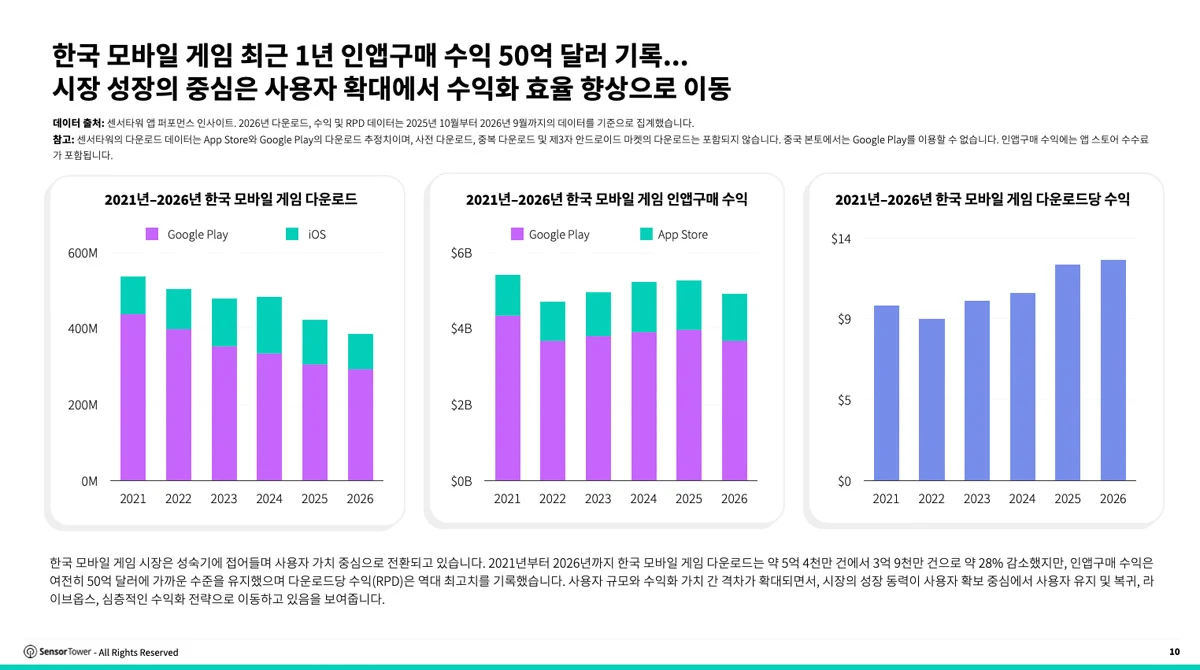
Sensor Tower published its "2026 Korea Game Market Insights" report on November 2, 2026, laying out detailed metrics for the Korean games market including mobile downloads, in‑app purchase (IAP) revenue, genre shifts, live operations activity, and global performance of Korean PC/console titles. The report aggregates trends from 2021 through 2026 and highlights both mobile and premium game performance across platforms and regions. From 2021 to 2026 Korean mobile game downloads fell from 540 million to 390 million, a 28% decline, while annual in‑app purchase revenue stayed roughly at the $5 billion level. Sensor Tower reports that revenue per download (RPD) reached an all‑time high during that period, and that publishers are placing heavier operational weight on retention, re‑engagement, live ops and monetization rather than raw new‑user acquisition. The report explicitly notes higher value extracted from existing and returning users as a structural shift in publisher strategy. Genre-level shifts are clear in the numbers. Puzzle games grew from 17% to 32% of total downloads between 2021 and 2026, becoming the largest download share by genre. Strategy games increased their share of IAP revenue from 13% to 25%, while RPGs declined from 66% to 43% of IAP share. Sensor Tower calls out specific outliers: idle RPG downloads fell 30% year‑over‑year in the most recent 12‑month window even as their IAP revenue jumped 57%, and merge games posted a 21% rise in downloads with a 94% increase in IAP revenue. Live operations are quantified as a central mechanic: Korea’s top mobile titles ran an average of 240 live events per month. The report gives concrete examples: Gossip Harbor increased monthly revenue more than 15× between January 2024 and August 2026 through continuous event runs and content updates. Nexon’s Maple Grow (Maple 키우기) sustained player engagement and monetization by linking events, using staged growth goals, and integrating competitive elements across event cycles. Those case studies sit alongside the raw event count to show how frequent, layered events map to measurable revenue gains. Korean publishers’ overseas footprint widened as well. From 2021 to 2026 the share of worldwide downloads coming from outside Korea rose from 88% to 92%, and the portion of IAP revenue earned abroad climbed from 44% to 49%. Domestically, lightweight iterations of established IP and multiplatform strategies surfaced in the report as new growth avenues: titles and franchises mentioned include MapleStory, Cookie Run, Ragnarok, StoneAge, plus domestic hits like Maple Grow and Sol: Enchant that leverage familiar IP with lighter gameplay loops or cross‑platform releases. The report also covers PC and console performance. Global packaged‑game sales on Steam, PlayStation and Xbox totaled roughly $32 billion between Q4 2025 and Q3 2026. Steam revenue rose from $7.27 billion in 2021 to $11.43 billion in 2026, a 57.3% increase, with cumulative platform sales split roughly 43% Steam and 57% PlayStation plus Xbox combined. Big Korean premium successes called out by Sensor Tower include: Ark Raiders (Embark Studio/Nexon) selling 20 million copies in seven months and generating more than $620 million in premium revenue; Pearl Abyss’s Red Desert surpassing $420 million in package sales and finishing as the top package seller across Steam, PlayStation and Xbox for two consecutive months; and Krafton’s Subnautica 2 posting over 5 million Steam wishlist adds pre‑launch, selling over 2 million copies on day one and peaking around 468,000 concurrent Steam players with a positive review rate above 90%. Sensor Tower pulls those threads into platform comparisons and title‑level outcomes. NCSoft’s Aion2 used a cross‑platform launch to drive both mobile and PC traction: the mobile version hit #1 on Korea’s Apple App Store and Google Play download charts, and by September 2026 had accumulated $38 million in global mobile IAP revenue. After the October 2026 Steam launch, Aion2 exceeded 1 million users on day one and held the global sales #1 spot for a week; in‑game spend on Steam through October 18 reached about $29 million, roughly 78 times the mobile IAP revenue in the same period. Takeaway: downloads are down 28% since 2021 while annual IAP sits near $5 billion and average monthly live events total 240. Against that backdrop, publishers are running frequent events, iterative content updates, and cross‑platform releases that correlate with strong revenue outcomes—Gossip Harbor’s 15× monthly revenue growth, Ark Raiders’ 20 million sales, and Aion2’s million‑user day on Steam are concrete outcomes tied to those operational choices.

Sesisoft starts CheonsangbiM2 pre-registration on Nov 2
News Mon, Nov 2, 2026

Sesisoft starts CheonsangbiM2 pre-registration on Nov 2

Sesisoft opened pre-registration for CheonsangbiM2 on November 2. The full 3D wuxia MMORPG, developed by G&I Soft and inheriting the Cheonsangbi IP, will run a closed beta test (CBT) in One Store's Beta Zone sometime in November ahead of launch. CheonsangbiM2 places its story in Song‑era China and follows a protagonist rising through the jianghu. Players can choose from four classes listed by the developer as 검, 도, 창, 조 (translated in official materials as Sword, Saber, Spear, and an auxiliary/assist class) and the game uses the IP’s RTG (Real Time Growth) system so character stats reflect playstyle. Compared with the previous CheonsangbiM, the developer says hunting and farming loops are strengthened and overall systems and user convenience have been improved to speed up progression and item flow. Pre-registration is available via the official website, Google Play, Apple App Store and One Store. Participating players will receive in-game items after launch — summoning tickets, enhancement stones and coins — and there are milestone rewards tied to cumulative pre-registration numbers. Sesisoft also runs a sharing event: entrants who share the pre-registration news can be entered into a raffle for Shinsegae gift certificates and Google Play gift cards. If you want the launch items or a shot at the raffle prizes, register through one of the listed stores now and watch One Store’s Beta Zone for the November CBT window.

GALAST launches official service Nov 2, 2026 at 15:00
News Mon, Nov 2, 2026

GALAST launches official service Nov 2, 2026 at 15:00

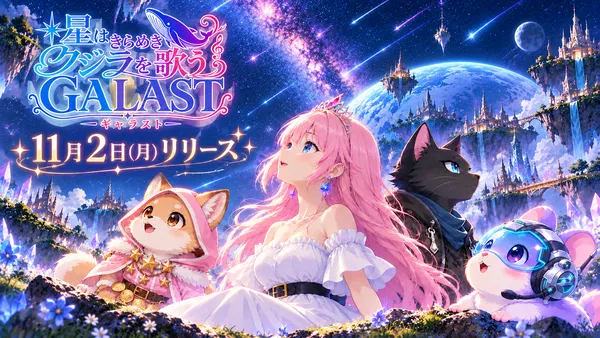
Ivessense Co., Ltd. has opened official service for GALAST, its online multiplayer board-game app, on iOS and Android at 15:00 on November 2, 2026. The release announcement names representative director Kousuke Shimizu and positions GALAST as a single app that gathers familiar tabletop games into a shared ‘‘universe’’ of planets. GALAST collects multiple classics under one interface: shogi, chess, mahjong, daifugo (Big Two), reversi, koikoi, go, billiards and more. Each game is represented as a distinct planet; players unlock and play on those planets, then spend earned coins to choose how their next play or planet grows. The app keeps every title’s original rules intact while routing rewards and progression through the planet system, so a good shogi streak can still lead you toward a chess or daifugo planet. Planet progression uses a simple key-and-coin economy. New planets require ten keys to unlock, and first-time logins grant 30 keys so players can immediately open three planets of their choice. Upgrading an unlocked planet consumes coins and, on success, raises its level to boost experience and victory reward multipliers; the chance of successful enhancement varies by level. Match types and rule sets change the feel of each fight. If you prefer long tactical reads, the app offers shogi, chess, go, reversi and gomoku-style play; hand-and-playflow games include daifugo and koikoi. Mahjong supports east-only and three-player modes. Billiards features both 9-ball and 8-ball with support for masse shots. Opponents can be real-time online players or AI, and newcomers can use AI matches plus in-game help to learn a new game before facing humans. GALAST layers competitive and casual rewards across daily play. Weekly leaderboards run both overall and by title with rewards for the top 100. Missions come in daily, weekly and beginner flavors to set small goals or nudge players toward different games. There’s a five-win coin bonus, and an ‘‘Onedari Bonus’’ point tank that fills from match results — even losses or draws add points, and a filled tank grants coins or keys. Additional earnings include login bonuses, exploration rewards that accumulate coins over time, ad-watching bonuses, friend referrals and a PR Challenge that pays coins for clicks on shared links; players are directed to in-game notices for exact conditions. The UX leans into the galactic theme with story-backed characters: Princess Astrea, Captain Zel, navigator Lumi, treasure hunter Pico and the legendary whale Gravity. The planet-selection screen reads like a voyage map, and in-match interaction is limited to icons and preset messages so communication stays quick. The narrative framing is modest — it ties planet choice to a light travel motif while the game screens focus on the mechanics at hand. Takeaway: with every title acting as a growable planet, GALAST funnels wins and participation into a single progression loop — you start with 30 keys (three planets unlocked) and a blend of competitive leaderboards, missions and recurring bonuses that convert playtime into coins, keys and upgrade opportunities.

KRAFTON launches K-pop AI chat Kiff in Korea on 2nd at 2PM
AI + Mobile Mon, Nov 2, 2026

KRAFTON launches K-pop AI chat Kiff in Korea on 2nd at 2PM

KRAFTON launched its K-pop AI character chat service Kiff in South Korea on the 2nd at 2:00 PM, offering Korean-language access on iOS and Android for users aged 14 and older. The app lets fans converse with AI characters built around K-pop themes and artist-created personas. Kiff’s first participating act is girl group FIFTY FIFTY from ATTRAKT; the members helped design the official character ‘Wenny,’ contributing both persona and visual development. Conversations split into a standard text chat mode and a character mode where the on-screen avatar reacts to dialogue — waving when you say hello, for example — and reflects past exchanges and stored user preferences in later chats. Users can also let the character start conversations or share artist news to keep interactions going. The app includes a daily “picture diary” feature that turns a day’s exchanged messages into an illustrated log, and KRAFTON published a behind-the-scenes serie­­s showing FIFTY FIFTY’s visits to the studio while they helped make Wenny. Episode 1 went live on the 24th, with Episode 2 released on the 2nd on Kiff’s official YouTube channel. 박재민, head of KRAFTON’s AI Frontier Division, said the company has a long-running internal focus on making game characters communicate naturally and described Kiff as a new way for fans to experience an artist’s world. KRAFTON says it will expand the roster of participating artists, add countries and roll out new features over time; the concrete user-facing bits to note now are the character mode’s reactive animations, the memory of previous chats, and the illustrated daily diary function — small details that change a static chatbot into a more personality-driven fan touchpoint. More information is available on Kiff’s official website and YouTube channel.

NHN doubles Guild War cities to 16 and raises weekly rewards to 3 trillion gold
News Mon, Nov 2, 2026

NHN doubles Guild War cities to 16 and raises weekly rewards to 3 trillion gold

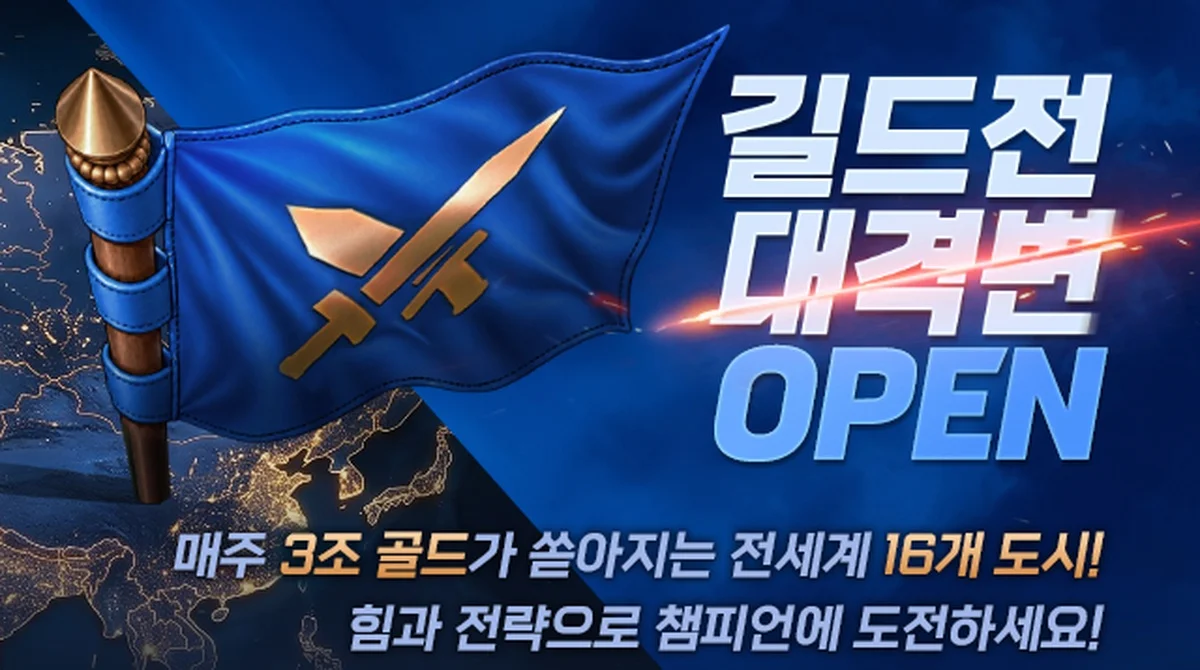
NHN said on the 2nd that it has overhauled the Guild War system across HanGame Poker and three mobile-linked titles — HanGame Poker Classic, HanGame Hold'em, and HanGame Low Badugi. The revamp expands the battlefield and changes weekly payouts, and the company described the changes in a single announcement covering the PC webboard and its mobile counterparts. Guild War's playable map has grown from eight cities to 16, and the weekly reward pool has been increased to 3 trillion gold (in-game currency). The contest runs every Friday through Sunday for three days; guilds compete to capture individual cities, and the winning guild takes the rewards generated by each captured city. NHN says the expansion comes two years after the original Guild War launch. Several new mechanics were added to shape decisions during the three-day battles. A new Guild Skill system introduces 12 skill options that guilds can invest in using points accumulated from weekly attendance and gameplay; these skills reset each week and are intended to influence how much Guild War points a guild earns. During sign-up, the system will recommend three cities tailored to each guild’s strength — labeled Challenge, Adequate, and Safe — and guilds can pick a battleground based on projected rankings. The world map visuals received attention as well: the 16 cities now appear as landmarks so players can quickly see where their guild is competing. Map lighting shifts from day to night as Guild War progresses, and successful captures trigger a fireworks effect on the map. Reward distribution also changed by region: each week one continent — Europe & Africa, Asia, or Pacific & Americas — will be selected as the event continent, and occupation celebration bonuses there are doubled. Reward ranks have been expanded from the previous top five up to the top ten. NHN said it will continue expanding and updating Guild War going forward. “Thanks to the interest players have shown over the past two years since we opened Guild War, we prepared this large-scale revamp,” said Oh Sangmin, head of NHN’s Classic Webboard Business Group. He added that the larger battlegrounds should let guild members enjoy competitive play together. If you like planning and coordination, the new 16-city map and weekly-reset Guild Skills give guilds more concrete levers to shape their weekend campaigns — and the doubled celebration bonus on the selected continent gives a clear target for guilds hunting bigger payouts.

Destiny Child: Assemble brings original story back in 1H 2027
News Fri, Oct 30, 2026

Destiny Child: Assemble brings original story back in 1H 2027

Com2uS says Destiny Child: Assemble will include the original mobile RPG’s main story and side episodes when it launches globally on iOS and Android in the first half of 2027. Tikitaka Studio is developing the new idle RPG while Com2uS handles global publishing, and the Assemble subtitle points to a reunion of the Archfiend candidates from the original game. Assemble will carry forward the established storyline and setting rather than replacing the original narrative, and it will add new narratives alongside returning scenarios. Character-specific stories will be folded into the game’s collection and progression systems, according to Com2uS’ update. The publisher has not yet explained how returning scenarios will be presented in-game or how the new gameplay systems will function, so narrative content is named but some mechanical details are still pending. A little context: Destiny Child originally launched from Shift Up, the studio behind Stellar Blade and Goddess of Victory: NIKKE, and its service ended in September 2023 after nearly seven years. Com2uS frames Assemble as the franchise’s return during Destiny Child’s 10th anniversary, though further character and gameplay specifics have yet to be revealed. If you care about story continuity, Assemble promises a direct path back into the original campaigns and character tales through collection and progression features — just don’t expect a full breakdown of how those scenarios will play out until Com2uS publishes more technical or presentation details ahead of the 1H 2027 global release.

Miskatonic University Art Club launches on Android, Windows and Mac
News Fri, Oct 30, 2026

Miskatonic University Art Club launches on Android, Windows and Mac

Miskatonic University Art Club is a new online draw-and-guess party game from Asobibakurousagi, available now on Android, Windows and Mac. The game drops players into a university art club tasked with illustrating the Necronomicon, using descriptions pulled from the Cthulhu Mythos as written by American author H. P. Lovecraft. Matches run five rounds and support 2–8 players across private or Random Match rooms. Each round gives one player the creature name and a written description that only they can see; everyone else must guess the subject from that player’s drawing. Descriptions in the Necronomicon include things like “countless indescribable appendages” or “a formless chaos spilling blasphemous bubbles,” so you’re often sketching things that are intentionally hard to picture. Once everyone finishes drawing, all illustrations are revealed without names and players match pictures to creature names; you score for correctly identifying others’ drawings and for every player who correctly guesses your own. Miskatonic University Art Club offers two modes. Create a private room, share its room code, and customize drawing tools, time limits and other rules with friends; or pick Random Match and the game will pair you with other players automatically. Both modes accept between two and eight participants. The Android version is on Google Play for $2.99; Windows and Mac builds are available as well, per the source. If you liked that little uneasy thrill from the Necronomicon briefs, you might also notice our linked scoop: Titanium Court, a Surreal Autobattler Strategy Game about Fighting a Pointless War, shows up in the same roundup. Practical takeaway: for $2.99 on Google Play you get a cross‑platform party game built around single‑player prompts, five competitive rounds, and simple room options for 2–8 players — which makes it easy to bring friends when the descriptions get gloriously unhelpful.