
icon
News Community Store
Back to home

Daily Mobile Gaming News

A cleaner daily brief on mobile game launches, updates, and pre-registration moves worth watching.

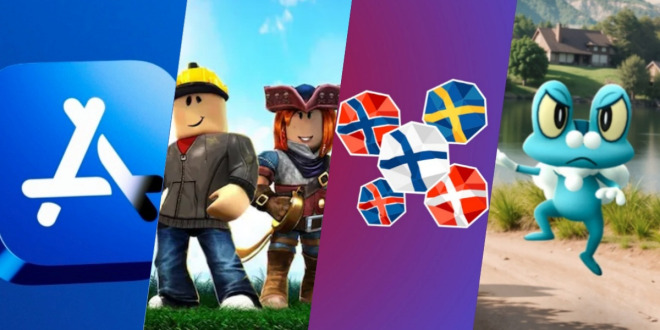
Apple proposes EU App Store changes for Oct 1, plus Roblox, Pokémon Go and Nordic AI
AI + Mobile Fri, Aug 21, 2026

Apple proposes EU App Store changes for Oct 1, plus Roblox, Pokémon Go and Nordic AI

Apple, Roblox, Pokémon Go and a cluster of Nordic studios all landed in PocketGamer.biz’s Week in Views this week — and the legwork wasn’t short on detail. Apple published proposed new EU App Store terms that it says will take effect on October 1, including a single set of publisher terms and a lower-fee route for linkouts. Roblox is facing fresh US Senate scrutiny over child safety. Niantic’s Pokémon Go marked its 10th anniversary in July and shared details about region-exclusive planning. And a Nordic-focused piece on how studios are actually using AI collected on-the-ground reporting from five industry insiders. Apple’s filing sets an October 1 effective date for the new EU terms and moves to replace the two sets of rules publishers previously saw with a single set. The company has also outlined a 15% commission for purchases that originate off the App Store and are completed via linkouts to the web, a proposal that mirrors what Apple has suggested in the US as part of the long-running Apple v Epic litigation. Epic Games responded to Apple’s US filing by noting that, under the Ninth Circuit’s definition of “necessary costs”, Apple admitted it would charge 0% for purchases made via web linkouts — a point Epic flagged publicly. So, between the EU paperwork and the US case there’s a lot of legal and contractual fine print players and developers will want to track closely. App Tracking Transparency is the other major change Apple is preparing for most EU countries. Germany’s Federal Cartel Office previously concluded that Apple’s ATT framework presented Apple’s own apps with more favourable consent prompts than third-party developers saw, a finding that raised competition concerns. Mobile Dev Memo’s Eric Seufert told our site he expects the ATT adjustments to push opt-in rates higher by a “non-trivial amount,” but that the economic effects will be precedential rather than immediately material. Apple says it has worked closely with the European Commission on the new terms; the Commission has not publicly commented on the company’s announcement so far. Roblox’s safety picture picked up new oversight this week after a US Senate investigation raised concerns about grooming and alleged sexual abuse connected to the platform. Senators told Roblox they appear to put revenue and engagement ahead of safety measures, and the company’s previous product changes were part of the discussion. Roblox has rolled out age-based accounts and expanded parental controls; Australian regulators, however, found this week that adults were still able to contact children despite those changes. Australia’s internet regulator has given Roblox three months to address the issues it identified, and US congressional inquiries are now underway. Niantic’s Pokémon Go got a moment to look back and forward when we spoke with Jack Wilcock, head of EMEA marketing, after the game’s 10th anniversary in July. Wilcock discussed long planning cycles for live events and campaigns, and confirmed the team ran a free edition of Go Fest as part of the celebrations. He also spoke about region-exclusive content, citing examples such as Stonjourner — a species that has been UK-only and was inspired by Stonehenge — and partnerships like the one with the National Trust that encourage players to explore outdoor locations in the UK. Wilcock and the team outlined Summer Quest and the logistics behind choosing event locations; the interview mixed practical marketing detail with developer-side constraints rather than fan-service recollection. The Nordic AI feature collected voices from five people across the region to see how studios are actually using AI today. Dodreams co-founder Mikael Gummerus said AI has been used extensively for data analysis but has so far made little impact on art or Unity development workflows. Tatu Petersen-Jessen of AI-native studio Odd Latent described roles compressing, with single people increasingly covering art, design and code. Tuomas Pelkonen from Nordia Law shifted the conversation away from classic IP fears to what he calls greater current risks: player backlash and “shadow AI” tools being used without formal sign-off. The piece is the first in a multi-part series; the reporter signalled part two will arrive soon. Takeaway: Apple’s EU timetable — October 1 for new terms and a proposed 15% off-store commission — plus Eric Seufert’s forecast that ATT tweaks will lift opt-ins “by a non-trivial amount,” means privacy and payment routing will be live compliance items for devs and publishers this autumn. If you run an app business in the EU, these are concrete operational changes to model into your fall roadmap.

Dream War: Sea of Swords opens first closed beta in China
News Fri, Aug 21, 2026

Dream War: Sea of Swords opens first closed beta in China

Dream War: Sea of Swords, developed by BlackJack Studio with members of the original Langrisser team, has begun its first closed test in China, and Bahamut's 電玩瘋 channel published a nearly 30-minute live gameplay video highlighting combat, character progression, exploration, and story scenes. The lead clip walks through turn-based encounters, weapons and equipment growth, and on-map exploration including ruins and NPC interactions. The game keeps the series' classic "commanding units" strategy while introducing a new "dual-commander, dual-unit" system: two heroes can deploy together, swap main and sub roles in response to battlefield conditions, and change skill effects and tactical roles by position. Each hero brings their own troop type and those troops can be mixed freely to create flexible formations; certain hero pairings trigger unique cooperative skills. Combat also features upgraded clash animations and breakable terrain that can alter engagements. Exploration shifts away from isolated battlefields to a contiguous world map where forests, ports, a royal city, caves and snowfields connect directly. Players can talk with NPCs, uncover side stories, gather crafting materials, solve environmental puzzles, and trigger hidden events that reveal deeper lore. Progression ties into a base-building thread: adventurers begin with a simple camp and gradually establish a personal legion stronghold as the journey unfolds. If you want the clearest look so far, Bahamut's near-30-minute footage is the closest thing to a hands-on preview: it lays out the turn-based system, gear and weapon progression, map exploration and some exploration-led encounters in concrete, watchable detail.

Yi Huan (Perfect World) launched April 29 — Unreal Seoul tech talk
News Fri, Aug 21, 2026

Yi Huan (Perfect World) launched April 29 — Unreal Seoul tech talk

Perfect World’s subculture open-world RPG Yi Huan, released April 29, was the subject of a deep-dive at Unreal Fest Seoul 2026 where two senior engineers from the studio explained how they built a seamless modern city that runs on PC, PS5 and mobile. Liu Jenyang and Feng Tianli walked an audience of Unreal developers through concrete systems used to stream, populate and render Hetero City without visible loading or jarring transitions. Liu Jenyang opened with the problem that looks simple from the player seat: walk across a district, step into a phone booth, and appear somewhere else almost instantly. For the team that behavior is anything but trivial. Their core rule was “trigger early, handle late”: spawn a virtual camera and streaming sources at the target location before the player arrives, then fetch terrain and data in the background so visible loading never interrupts play. Teleport and zone changes themselves are gated in three explicit stages. Gate one verifies safe loading of the destination data, gate two checks that the play environment can be recovered, and gate three returns control to the player only after dynamic objects such as NPCs and vehicles and the local world state are fully resolved. Liu said that sequence prevents incomplete world states from ever being exposed to players. Memory management for overlapping zones — the so-called dual-residency window where both origin and destination live in memory — required strict budgeting. Rather than promote every object to a heavy full actor, the team used lightweight placement representations to minimize both memory footprint and activation cost during transitions. Large parts of the city are filled with actors that represent everyday life, so the studio balanced which entities stayed lightweight and which became full actors only when necessary. That selective activation lowered peak memory use and helped avoid out-of-memory conditions during handoffs between areas. A headline technical win came from crowd and entity optimization. Starting on Unreal Engine 5.5 and carrying that work into 5.6, Hota Studio adopted the Mass framework to manage thousands of pedestrians and vehicles as low-cost data units. The tricky moment is when many NPCs simultaneously request heavy computation in the same frame. To avoid hitching, the team deliberately delays spawning full actors even when entities enter view; streaming and collision conditions must be fully satisfied before actor creation. They also take a single view-state snapshot to evaluate entities during rapid camera rotation, then apply triple buffering to prevent data races. Around that core they built a three-layer runner budget: Update Rate to throttle logic frequency, Pending Range to limit how far they evaluate candidates, and Submission Caps to cap how many actors get spawned per frame. On Android devices they simulated 300 agents and reported that applying submission-cap control sharply reduced frame drops and kept performance close to 60fps. Feng Tianli followed with the studio’s scalability policy for bridging PC and mobile hardware differences. He emphasized that the mobile pipeline is not just the PC sliders turned down; it is a separate, purpose-built stack that accounts for prolonged thermal load, throttling and bandwidth limits. To support Android fragmentation the team layered device profiles from broad platform families down to specific model mappings, and they prioritize per-model rules over generic GPU rules. They added a verification-driven trust system: even when a device is tagged with an Epic or Cinematic profile, runtime checks across GPU vendor, rendering path and CPU classification must pass before Lumen or hardware ray tracing turn on. Device coverage uses a two-tier model. A basic fallback layer provides a safety net that should work across all devices, while a higher-coverage tier targets 90–95% of intended devices via more than 390,000 detailed profiles. Feng also noted a curated whitelist for some hardware quirks: although Vulkan is Android’s default API, 135 devices are on a separate whitelist where OpenGL ES or feature-disable modes are more stable. Those exceptions let the studio avoid enabling expensive features on devices that can’t handle them reliably. Directional light and shadow handling — a heavyweight cost in any open city — got a series of practical optimizations. The day-night cycle is split into 12 segments and the sun’s position is held fixed within each segment. That stability allows the team to avoid redrawing distant shadow maps every frame and safely reuse cached shadow data across multiple frames. On PC they tackled cache invalidation caused by giant instanced objects: instead of invalidating the whole shadow cache when a large bounding box crosses the view, they convert the camera frustum into a 2D footprint and update only the actually visible tiles. Liu reported that change cut unnecessary full-shadow updates by about 90% and reduced GPU shadow cost by 20–30%. Mobile shadowing uses a hybrid pipeline: a responsive CSM for near-range detail, and a layered shadow map (LSM) for distant shadows that locks to camera position rather than view direction. Because LSM doesn’t follow camera rotation, it avoids re-rendering when the player turns, and region moves are split into N×N tiles that get refreshed over several frames. The system also reuses shadow pixels from the previous region and tracks the mesh IDs that contributed to the cache so only newly appearing objects need full re-rendering. Feng closed his talk with capture footage from an iPhone 16 Pro and the line that framed their engineering goal: maximize cache reuse and keep all updates inside the frame budget. Takeaway: Hota Studio spent their engineering budget on deterministic staging, selective activation and layered device rules — and the numbers back the effort: a 300-agent Android simulation held near 60fps when submission caps were used, shadow cache pruning cut full updates by roughly 90%, and the two-tier device coverage plus a 135-device special whitelist let the studio target roughly 90–95% of devices using over 390,000 detailed profiles. If you care about both dense urban simulation and broad mobile compatibility, those concrete systems are what make Yi Huan’s seamless city feel intact across PC, PS5 and phones.

Playgama launches Wrap for standalone HTML5 game sites — rollout from Aug 21
Launch Fri, Aug 21, 2026

Playgama launches Wrap for standalone HTML5 game sites — rollout from Aug 21

Playgama has launched Wrap, a free infrastructure that turns HTML5 games into standalone websites with developer-owned domains, monetisation, and analytics, and the service begins rolling out to developers via the Developer Dashboard from August 21st. Early users named by Playgama include Hazmob, StoreRider, HG Point and Tridy Games, and the company says initial results show session time, retention and revenue per user beating some established channels. Playgama positions Wrap as the final piece of its standalone-site stack alongside publishing, monetisation and growth tools. Wrap delivers a ready-to-use website for each game: developers integrate the open-source Playgama Bridge SDK, upload their HTML5 build, and configure settings through the Playgama console. Websites include in-game purchase support, SEO, analytics, and monetisation and user-acquisition tooling wired into Playgama Ad. Updates sync automatically after upload, and developers purchase and own their domain outright. Playgama also says the tooling can work with mobile or PC projects that have been adapted to HTML5. Playgama highlights commercial scale: Wrap gives access to a global pool of around 500 million monthly web players and routes monetisation and player acquisition through the Playgama ad network. The company lists Hazmob, StoreRider, HG Point and Tridy Games among its first adopters and reports early performance gains in session time, retention and revenue per user versus some existing channels. Integration work is done via the Bridge SDK and the Playgama console; once set up, updates and monetisation are handled through Playgama's services. Founder Dmitry Kachmar is quoted saying the industry "has shifted again, and games on standalone domains have grown into a segment of their own," and that Playgama’s role is to provide the tooling to let developers "take back control and scale games on their own terms." If you want a hosted site, direct domain ownership, built-in IAP and Playgama's ad-network distribution, Wrap is now available to developers starting August 21st and will expand to wider access in the following weeks.

Terraria adds 30+ new items and major mana fixes in 1.4.5.7 patch
News Fri, Aug 21, 2026

Terraria adds 30+ new items and major mana fixes in 1.4.5.7 patch

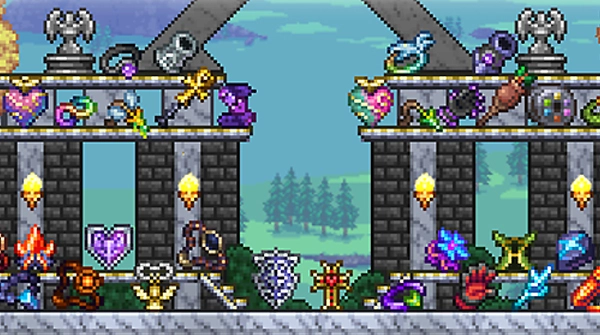
Terraria received its 1.4.5.7 patch on the PC version when Re-Logic applied the update on the 20th, adding more than 30 new items and a suite of combat and quality-of-life changes. The patch hits PC first; mobile and console builds will follow after each platform’s certification. Re-Logic also teased a future 1.4.6 update that will include cross-play support. The new loot list leads with magic weapons such as the Sunrise Wand and Glacier Fang, plus summon weapons, accessories for ranged combat, and gear tied to mana regeneration. Re-Logic overhauled the Gem Staff and Gem Robe: each gem now grants a unique effect to the staff, wearing a Gem Robe applies the robe’s gem effect to the staff, and matching a staff and robe gem increases damage. Crafting the gem staff now requires about 30% less ore. Beyond the gem rework, the patch introduces Palworld collaboration equipment upgrade material “Bond Peach” and two new secret seeds. Numerous accessories targeting mana regen, ranged attacks, and summoning were added alongside the weapon and armor additions, expanding build options across playstyles. Combat balance received widespread adjustments with the biggest changes aimed at magic weapons. Mana was reworked: the recovery delay has been removed, mana regenerates during attacks, and standing still or low-mana states now regenerate faster. Players can also use a magic attack even when mana is low at 40% of the weapon’s base attack speed. Melee boomerangs now return faster depending on the player’s attack speed, all rocket-type ranged weapons have their self-damage fixed at 60, and certain summon setups allow every whip to apply a stacking effect when the proper accessory is equipped. Individual tweaks applied across melee, ranged, magic, and summon categories as well. The Martian mothership encounter received AI and behavior tweaks: the ship stops attacking if the player dies and no alternate target exists or if the ship begins to flee, and it ceases firing its death laser when transitioning into phase two. The patch also includes a variety of other bug fixes and smaller improvements documented by the team. Takeaway: PC players get the new content and the mana overhaul immediately, while mobile and console players are waiting for platform approvals; Re-Logic’s mention of 1.4.6 with cross-play makes the next patch the obvious thing to watch for cross-platform multiplayer changes.

Moomin: Moominvalley Summer Festival launches Nov 12, 2026 — Switch physical pre-orders open Aug 21
News Fri, Aug 21, 2026

Moomin: Moominvalley Summer Festival launches Nov 12, 2026 — Switch physical pre-orders open Aug 21

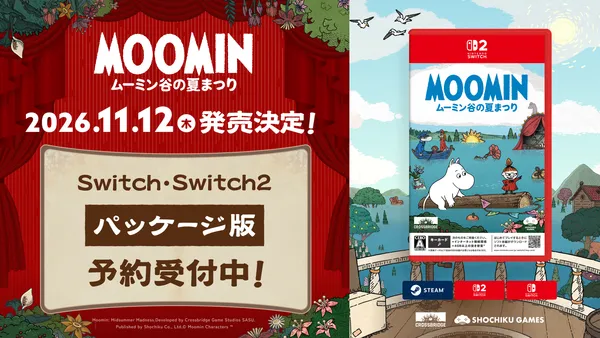
Moomin: Moominvalley Summer Festival, a point-and-click adventure from France’s Crossbridge and published by Shochiku Games, will release on November 12, 2026 for Nintendo Switch and Nintendo Switch 2. Shochiku Games opened package-version pre-orders today, August 21, across nationwide game retailers and online stores, and has outlined the contents for both limited and first-run standard editions. The Switch package editions include a shared set of physical bonuses: a Moominvalley postcard book featuring the title’s art, an embroidered handkerchief, a mesh pouch, a frosted-glass–style keychain, and a glossy “churun” clear sticker. Shochiku Games says those items appear in both the limited edition and the regular retail edition, though the regular edition’s bonus set is available only in the first production run. Images and item details will be posted on the game’s official site on a rolling schedule. Retailer-specific preorder bonuses have also been locked in. The announcement lists Rakuten Books, amiami, Amazon, Joshin, animate, Bic Camera, Sofmap, and Kojima as participating stores preparing original store-only extras. Shochiku Games did not include the exact item images in the initial release; the company plans to publish visuals and fuller item descriptions on the official product pages. Shochiku Games published a new trailer on its official YouTube channel that includes the first public gameplay scenes. The footage mixes recreated moments from Tove Jansson’s novels with newly designed sequences created for the game, showing exploration and story beats in the theatre setting. The trailer is positioned as the first extended look at the game’s scenes and atmosphere. The game’s story follows the Moomintroll family after a great flood. While waiting for the absent Snufkin to return from his travels, the Moomins drift to an odd building: a theatre stocked with costumes, scripts, and what the announcement calls the unique “magic” of the stage. Players will encounter both lovingly reconstructed scenes from the original novels and brand-new adventures written for the title, presented in the point-and-click format developed by Crossbridge. Shochiku Games is handling the package distribution for both Nintendo Switch and Nintendo Switch 2; pre-orders are available now at physical stores and e-commerce sites across Japan. The publisher encourages reservations by listing participating shops and promising that the official site will update with product images and store-bonus visuals. For collectors who prefer physical extras, the combination of a limited edition, first-run regular bonuses, and retailer-specific items makes pre-order timing relevant. Takeaway: if you want the postcard book, embroidered handkerchief, mesh pouch, frosted keychain or the first-run regular edition items, place a package pre-order now—physical bonuses are tied to the limited edition, the standard edition’s initial production run, and retailer-exclusive gifts, and the full set of images and item pages will appear on the official site ahead of the November 12, 2026 release.

Akupara Games launches first Akupara Direct on Sept 6, 2026
Launch Thu, Aug 20, 2026

Akupara Games launches first Akupara Direct on Sept 6, 2026

Akupara Games has announced its first Akupara Direct, a half-hour indie game showcase airing on September 6, 2026 to coincide with the publisher’s tenth anniversary. The stream will be hosted by indie curator AlphaBetaGamer and will include multiple new game reveals plus release-date announcements for previously confirmed titles; the publisher says a full lineup will be published closer to the event. After the main thirty-minute presentation Akupara will keep streaming through the day. Programming scheduled for the follow-up block includes developers playing their games, AMAs, and community-focused segments, so hands-on time and conversations will continue well beyond the headline show. Consider the half-hour as the reveal window and the rest of the day as the developer hangout—plenty of chances to see games in action and hear from their creators.

FANTASY LIFE i launches on iOS and Android for $24.99
News Thu, Aug 20, 2026

FANTASY LIFE i launches on iOS and Android for $24.99

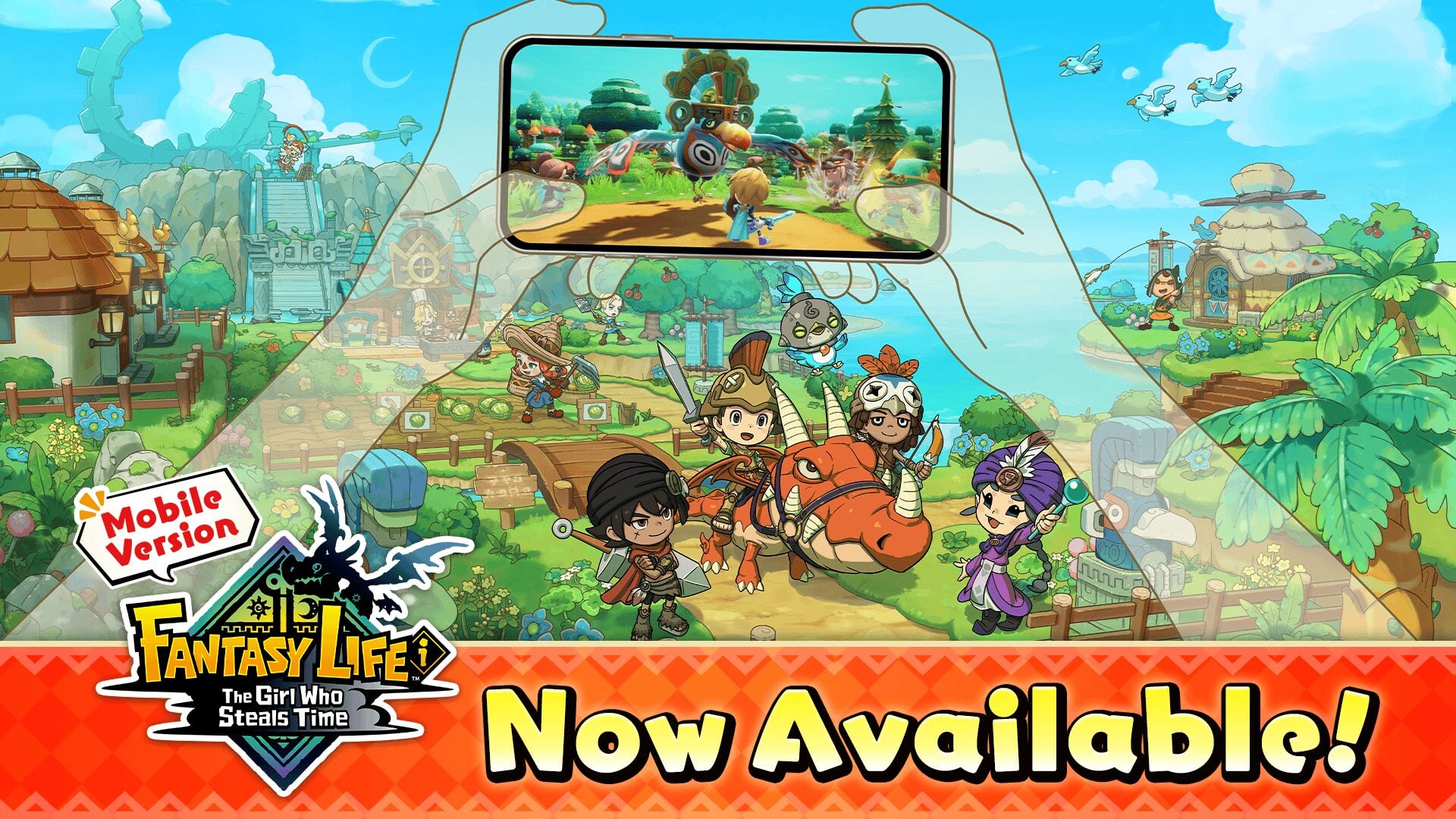
FANTASY LIFE i: The Girl Who Steals Time is available now on iOS via the App Store and Android via Google Play for $24.99, LEVEL-5 and LEVEL-5 Osaka Office announced. The mobile versions include all updates released so far and support cross-play and cross-save with existing console and PC releases. If you already have a save on another platform, you can pick up where you left off on your phone. LEVEL-5 notes the mobile release preserves the game’s visuals while including all currently available content, specifically the Digital Deluxe Edition and the latest downloadable content. The original game released across PS5, Xbox Series, PS4, Switch and PC (Steam) on May 21, 2025, and then arrived on Switch 2 on June 5, 2025. The mobile ports bring the same story and features to handheld play, not a cut-down companion app. The mobile release also adds collaboration outfits inspired by Professor Layton and Yo-Kai Watch; those outfits are included in the mobile versions and have been added to the console versions via the update. The game’s setting is Reveria, where players spend a slow-life RPG campaign restoring a deserted island across a timeline spanning 1,000 years. Players can switch freely between 14 Lives (jobs) as they progress through the island’s mysteries and world-building tasks. To mark the launch, the official Fantasy Life account is running a social campaign from August 20, 2026 to August 31, 2026 (JST). Participants should follow the FANTASY LIFE X account and post their favorite part of FANTASY LIFE i with the hashtags #FLi and #FLiFavorites. LEVEL-5 will randomly award App Store or Google Play gift codes worth approximately US$10 to 100 winners, and will also select 20 entrants who share memorable stories to receive an original smartphone stand. If you want to move saves between platforms, the cross-save and cross-play support is the clearest practical win: the mobile version carries over all updates and DLC, and it can read the same progress as the earlier PS5/Xbox/PS4/Switch/Steam and Switch 2 releases. For players who already own the game on another platform, that means continued progression on mobile rather than starting anew. For newcomers, the mobile release packages the full Digital Deluxe content and recent DLC in a single $24.99 storefront purchase.

StarToU rebrands from V Project and debuts MacGuffin on Aug 20
News Thu, Aug 20, 2026

StarToU rebrands from V Project and debuts MacGuffin on Aug 20

Elementa’s immersive 3D idol project V Project has officially changed its name to StarToU, the studio announced alongside a first look at the game’s systems and a new idol group reveal on August 20. The rebrand ties the game to the StarToU community platform and to the project’s in-world “Echoes” memory device, which uses so-called Touch technology for immersive interactions. Pre-registration is open now via the official site and the project’s X account for anyone who wants the rollout notices and future idol reveals. StarToU unveiled its new creative idol group MacGuffin on August 20. The four-member group—Tay, Yoora, Lim, and Noki—leans into hip-hop and an aesthetic described as “rebellion against rules × playful pursuit,” mixing sharp, unconventional creativity with moments of humor and charm. The group’s PV presents them in cool street-style outfits and a more mature image; the announcement contrasts that look with previously released trainees (LEE, Near, OCT), who were shown as fresh and energetic. The publisher called MacGuffin a distinct creative direction within the StarToU roster, intended to expand the project’s character lineup and content variety. Alongside the group reveal StarToU released initial details about its core gameplay. Players will enter the idol world as StarToU users, experiencing character-driven stories through Echoes’ Touch memory-reproduction tech. The announced music space offers rhythm-based interactions and synchronized stage performances; before shows, players can adjust characters, outfits, and card lineups to customize their stage. The game also includes social-style features such as a star notebook and TOKI exchanges, which the release lists as additional ways to deepen relationships with idols and participate in non-performance interactions. Elementa framed StarToU’s content plan around multi-faceted character IP and group management as well as ongoing updates. The announcement says the game will develop idol operation mechanics and cross-media character content over time, with multiple groups and styles planned to appear through continued updates. For immediate engagement channels, the team encourages following the official X account and using the website’s pre-registration form to receive upcoming information and media drops about new characters and systems. A closed beta test is scheduled for some regions in the second half of this year, with wider regional tests planned afterward. If you want to follow the rollout closely, pre-registration plus following the official X account is the concrete way to receive those CBT invitations and the next batch of idol reveals. StarToU has switched names, shown its first mature-sounding group, and mapped out the rhythm-and-interaction systems that will be trialed in H2 CBTs—so signing up is the practical move for players who want to join the early tests or collect future character drops.

Fantasy Life i launches on iOS and Android for $24.99
Launch Thu, Aug 20, 2026

Fantasy Life i launches on iOS and Android for $24.99

Fantasy Life i: The Girl Who Steals Time is now available on iOS and Android for $24.99, Level-5 confirmed. The mobile release supports cross-play and cross-save with the game's existing PlayStation, Xbox, Nintendo Switch, Nintendo Switch 2 and Steam versions. The mobile port adds touch controls tuned for phones while keeping controller support. It ships with the same post-launch updates and DLC that other platforms received, and the storefront pages list no additional in-game purchases. Cross-save lets players carry a single save between supported devices — for example, gather materials on your phone and keep playing on console — and online multiplayer is included, from visiting other players’ islands to tackling dungeons together. The 2P Family co-op feature is also present in the mobile build. If you already own a save on PC or console, you can pick up the mobile version and keep playing the same world without buying extra content or starting over — handy for short play sessions on the go.