

Game Ownership Issues, Love and Deepspace Backlash, and Pikmin Bloom's Surge
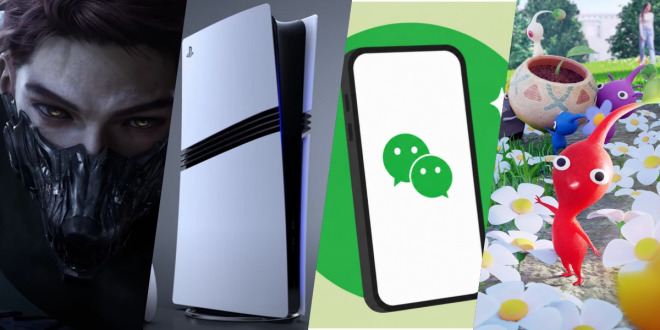
The mobile gaming landscape is evolving rapidly, and this week's highlights include critical discussions on game ownership, a controversial character cancellation in Love and Deepspace, record-breaking revenue for Pikmin Bloom, and insights into WeChat's mini-game ecosystem. The Mobile Mavens have sparked a dialogue about game ownership amid Sony's announcement to cease physical game sales by January 2028, following the news that Grand Theft Auto VI will also not launch on disc. This shift further emphasizes the Stop Killing Games movement, which advocates for better preservation of digital titles. As mobile gaming lacks physical copies, there are concerns that many games could be lost over time. Ali Farha from Behold Ventures stressed that players deserve clarity on ownership rights, asserting, "If a studio can't grant full ownership, that needs to be stated clearly up front." Burny Games' Olha Tarasova highlighted that uncertainty regarding a game's longevity might deter players from making purchases, underscoring the importance of transparent communication about game lifecycles. Mode 7 Games' Paul Kilduff-Taylor echoed these sentiments, urging the industry to heed player concerns and improve game preservation efforts. In a surprising turn, Papergames announced the cancellation of Valko, a planned character for Love and Deepspace, after facing backlash over sensitive historical references and promotional messaging that raised safety concerns. This decision also included a commitment to not introduce any new characters in the future, a bold move for a live service game. While existing players have requested more content focused on current characters, many outside China expressed disappointment over Valko's cancellation, demonstrating a divide in player expectations. Meanwhile, Pikmin Bloom is experiencing a revenue boom, with a staggering 902% increase in player spending in Taiwan year-over-year. The game has already earned 94% of its total revenue for 2025 within the first half of 2026, bringing in $35.7 million so far. Japan was previously the leading market for Pikmin Bloom, but Taiwan now contributes 52% of player spending on major app stores. As Pikmin Bloom capitalizes on this surge, it has launched a new event in South Korea, indicating a potential expansion in that market. Lastly, insights from SocialPeta's Summer Liu reveal that WeChat's mini-games generated $2.3 billion in the first half of 2024, marking a 60% increase from the previous year. Liu describes mini-games as an engine for validating gameplay, monetizing through ads and in-app purchases, and directing engaged players to full app versions. While this model has found success in China, Liu notes that the unique ecosystem of WeChat, with its vast user base and integrated payment systems, poses challenges for Western markets attempting to replicate this success.
Original source
PocketGamer.biz