

FitNot’s Abdallah Elshabrawy on MENA games: Culture and cash
Key takeaways
- Mobile is 64% of games spending in the Middle East and 82% in Africa (2026)
- Global mobile downloads fell 25% in H1 2026; CPI rose 30% to $0.56
- Saudi = ~25% of FitNot impressions but >60% of its revenue; Egypt = ~16% impressions, <6% revenue
- Women rose from 32% to 38% of gamers in MENA-3 over three years
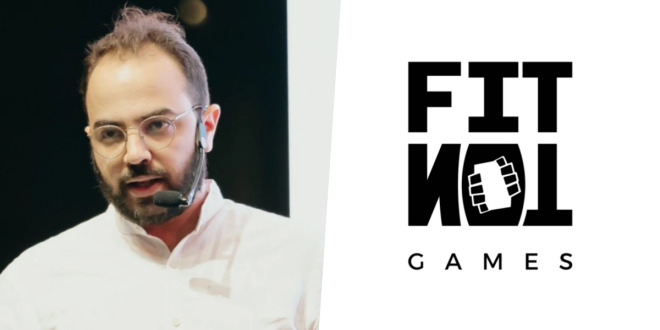
FitNot Games founder and CEO Abdallah Elshabrawy lays out a blunt roadmap for MENA mobile: culture draws attention, but revenue keeps a studio alive. Speaking to PocketGamer.biz ahead of the new year, Elshabrawy named rising user acquisition costs, uneven regional spending, concentrated capital, and a talent gap as the main constraints for studios across the Middle East and North Africa. He also repeated a line that’s worth saving for the pitch deck: “Culture gets a game noticed. Quality keeps players.”
Elshabrawy gave hard numbers rather than slogans. In the Middle East mobile accounts for 64% of games spending this year and in Africa mobile makes up 82% of spending, which he translates to roughly $4.2 billion for the Middle East and $1.6 billion for Africa in 2026. In MENA-3 — his shorthand for the region subset he tracks — 94% of players use mobile as their platform. At the same time, global mobile downloads fell 25% in the first half of 2026 while cost per install rose 30% to $0.56, a squeeze that larger publishers can weather but smaller studios, like FitNot in Cairo, feel “every day.”
That squeeze shows up in FitNot’s own ad metrics. Saudi Arabia generates about a quarter of FitNot’s ad impressions but contributes over 60% of its revenue; Egypt supplies roughly 16% of impressions yet under 6% of revenue. Elshabrawy phrases the operational consequence plainly: Egyptian players give time and reach, Saudi players provide monetization. FitNot’s practical response is to test in Egypt where installs are cheaper, and scale monetization in Gulf markets. He also highlighted an income split inside countries: only 4% of Egyptian gamers earn more than $900 a month, compared with 86% in Saudi Arabia — an uneven spending power problem that shapes acquisition strategy and monetization planning.
Beyond ad economics there’s a policy angle Elshabrawy leans on. He points to Türkiye’s government package as a template: tax breaks on export revenue, tax-free salaries for R&D staff inside technology zones, and state support that covers a significant portion of international marketing and store fees. Saudi Arabia already has explicit targets — 39,000 jobs and 250 gaming companies — and Elshabrawy says every MENA country needs its own version of tax treatment for studios earning in foreign currency, funding for production (not only events), and training that leads to real studio jobs. He framed those measures as the levers that let studios reinvest and scale early, rather than a general wish list.
On product trends and local culture, FitNot keeps the conversation granular. Arabic content remains undervalued by many global publishers, Elshabrawy argues, because they often treat Arabic as a localization checkbox instead of building for Arabic players from day one. He calls out Arabic card games such as Trix and Tarneeb, anime-style RPGs targeted at Saudi players, and culturally rooted narrative games as local strengths. He also flagged a big change in audience composition: women in MENA-3 rose from 32% to 38% of gamers in three years, a shift the studio sees in its ad data and in play patterns across markets.
Elshabrawy named regional players and newcomers without using generic praise. On the investment and publishing side he listed Savvy Games Group — which owns Scopely and Moonton in its portfolio — as the largest capital force, and singled out Tamatem, Yalla Group and Maysalward as leaders in Arabic mobile. MBC Group matters for publishing, and Sawa Group and Naphora are firms he said to watch. From Egypt he called out 2024 Studios and Game Hermits for notable work. As for FitNot itself, he noted the studio graduated from Merak Capital’s Exel accelerator and AUC Venture Lab, was included in PocketGamer.biz’s Top 30 MENA Game Makers of 2025, and built the Fananees titles for MBC Group during Ramadan 2025 — credentials he uses to temper the claim “studio to watch” with the reality that FitNot is not yet a regional heavyweight.
Where money is missing, Elshabrawy gets practical: the sector has accelerators and pitch events, but lacks the financing that carries studios from prototype to launch without taking their IP. He described that phase as “the hard middle,” where many mobile projects run out of runway before they find an audience. He also highlighted AI as an efficiency tool — “a team of 10 can now prototype at the speed of a team of 30” — but stopped short of calling AI a defining differentiator for the region. Instead he circled back to culture and language as the real differentiators, and to the simple arithmetic studios face: large audiences in Egypt and Iraq engage extensively but spend little; the Gulf supplies the spending power. That split determines FitNot’s product and go-to-market choices.
Why it matters
Takeaway: for MENA studios the immediate bottleneck is finance that preserves IP through the prototype-to-launch window, not another accelerator or PR push. Between rising acquisition costs, the Gulf-versus-Egypt revenue split FitNot reports, and the policy examples Elshabrawy cites in Türkiye and Saudi Arabia, the clearest actionable gap is money for production and scaling — money that lets teams convert local reach and culturally tailored design into sustainable revenue without surrendering ownership of their games.
Original source
PocketGamer.biz