

Apple launches iPhone Duo — foldable iPhone, pre-orders Oct 16, ships Oct 23
Key takeaways
- Pre-orders start Oct 16 (8:00 p.m. Taiwan time); Taiwan deliveries Oct 23
- Availability expands to 28 more countries on Oct 30; global pre-order regions exceed 63
- Starting price NT$74,900; storage: 256GB, 512GB, 1TB, 2TB
- A20 Pro chip; sustained performance up to 35% higher than iPhone 17 Pro
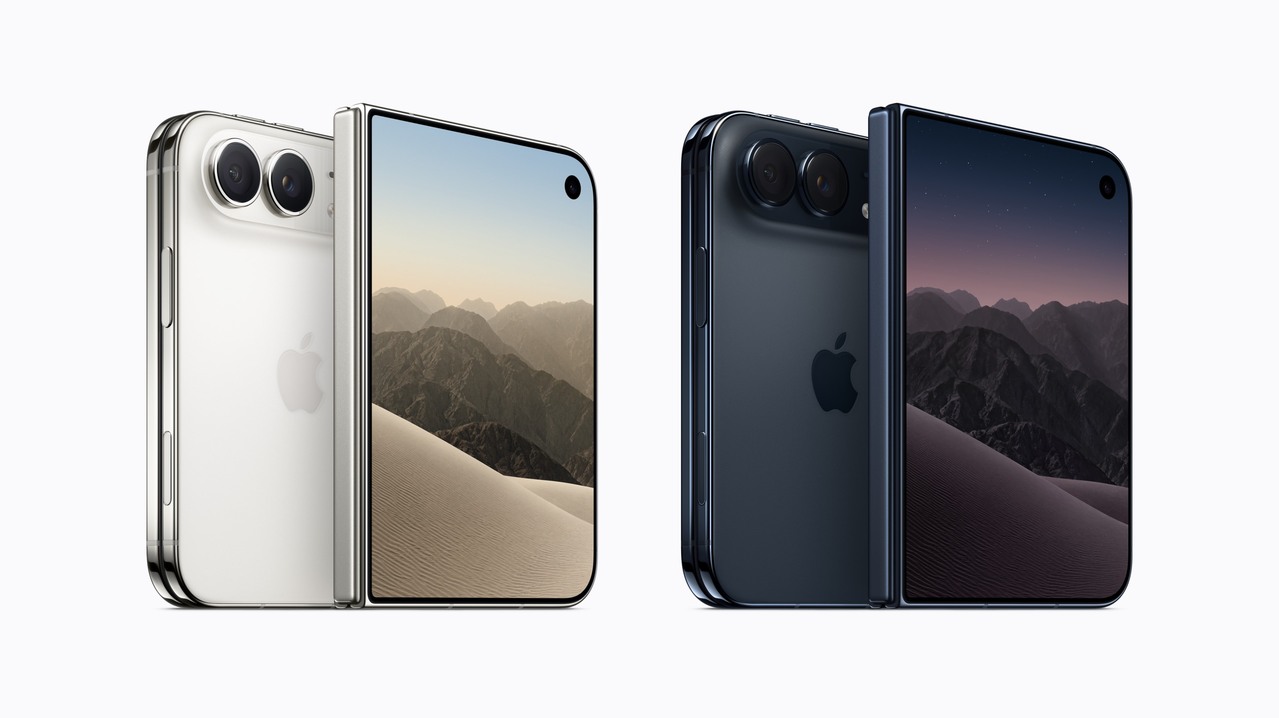
Apple today unveiled the iPhone Duo, its first foldable iPhone, with pre-orders opening on October 16 and initial shipments starting October 23 in Taiwan and over 63 other countries and regions. The company said the device folds to a pocket-friendly 5.4-inch outer Super Retina XDR display and opens to a 7.6-inch inner Super Retina XDR canvas, and will be available in Starlight White and Night Sky starting at NT$74,900 with 256GB, 512GB, 1TB and 2TB storage options. Apple CEO John Ternus called it “the most transformative iPhone since the original,” and the announcement names Touch ID on the side button and eSIM-only design among the device’s core features.
Physically, the iPhone Duo aims to balance a large internal screen with single-handed convenience when folded. Closed, the 5.4-inch outer display offers about 90% of the screen area of the iPhone 18 Pro, while unfolded the 7.6-inch inner panel is 50% larger than the iPhone 18 Pro Max. Apple describes a hinge built from more than 100 parts to control opening and support the center of the screen; the inner display is engineered to withstand the wear of daily use. The handset also carries IP68 water and dust resistance and a dual-tone finish: a mirror-polished body and a 3D-printed hinge cover with a contrasting micro‑sandblasted treatment.
Under the hood, Apple says the iPhone Duo runs on the A20 Pro chip — the same chip used in iPhone 18 Pro models — paired with an advanced thermal system and a new chip package that connects A20 Pro to a custom vapor chamber. Apple states sustained performance is up to 35% higher than iPhone 17 Pro. The A20 Pro’s display engine drives both inner and outer screens, and the phone houses two high-energy battery cells placed left and right to maximize capacity while keeping the device slim. Wireless design choices include a global shift to eSIM, and Apple’s N1 wireless chip supports Wi‑Fi 7, Bluetooth 6 and Thread, while the new C2 modem uses AI to improve cellular quality and stability.
Photography is a major pillar of the iPhone Duo pitch. The main camera uses a new 48MP fused sensor that can produce full 48MP photos and defaults to 24MP capture to keep files shareable. A matching 48MP fused ultrawide supports wider fields and macro shots, and Center Stage on the front-facing camera can automatically frame subjects in any orientation so you don’t have to rotate the phone for landscape selfies. Apple lists several fold-specific camera features: on-device AI called Smart Capture will auto-trigger photos when subjects pose, the outer display can preview high-resolution rear-camera selfies, Duo Dual Preview shows a live preview on the outer screen to help with posing and composition, and a “Look Here” animation plays on the outer display to attract children’s attention. Duo Dual FaceTime enables people nearby to join calls using the outer screen.
Software for the Duo is iOS 27, which Apple says is redesigned for the foldable form while remaining familiar. Controls that used to live on the lock screen, Dock and app navigation now appear along the sides; Apple’s first-party apps are optimized and developers can use updated APIs in the latest SDK and Xcode’s Device Hub to adapt apps for the fold. Apple noted third-party apps including Netflix, Zoom and Slack are already using the fold to offer immersive or productivity-focused layouts, and a new Standby mode activates on both inner and outer displays when the Duo is laid down, even without charging. Apple Intelligence enhancements are also listed as a platform-level upgrade for smarter app interactions and photo features such as spatial reconstruction.
Apple lays out a long list of durability and materials details: a 5-grade titanium construction, an ultra-ceramic shield front panel branded as Shield 2 with three times the scratch resistance of the previous generation, and an ultra-ceramic shield on the back. The hinge uses a mix of polished and micro-sandblasted titanium parts, and certain hinge covers are 3D printed. Packaging and materials include environmental figures: 35% recycled content overall, batteries using 100% recycled cobalt, and 3D-printed hinge covers made from 100% recycled titanium. Apple also states 60% of the iPhone Duo’s manufacturing process runs on renewable energy and that paper packaging is 100% fiber for easy home recycling, all framed as steps toward Apple’s 2030 carbon-neutral goal.
Pricing and timing are concrete: pre-orders begin in Taiwan and more than 63 countries and regions at 8:00 p.m. Taiwan time on Friday, October 16. Initial deliveries start Friday, October 23, with supply to another 28 countries and regions beginning Friday, October 30. The starting price in Taiwan is NT$74,900 and storage tiers are 256GB, 512GB, 1TB and 2TB. Apple also introduced new accessories for the Duo, including a two-sided MagSafe folio available in navy and light tan with an integrated stand.
Why it matters
Takeaway: the iPhone Duo pairs a 7.6-inch inner display with a pocketable 5.4-inch outer screen, A20 Pro performance tied to a new thermal and packaging approach, an eSIM-only design, and fold-specific camera and software features — and Apple schedules regional pre-orders on Oct 16 with initial shipments Oct 23 and wider availability Oct 30. Expect the device’s noise to come from how apps and photographers use that dual-screen camera workflow rather than from any single spec on the spec sheet.
Original source
Google News: Bahamut